
Dartmouth’s Class of 2029: A Snapshot of Selectivity and Access
Dartmouth College recently unveiled its admissions statistics for the Class of 2029, offering a glimpse into the evolving landscape of higher education. From a pool of 28,230 applicants, the university extended offers to 1,702 students, resulting in a highly selective admission rate of 6%. It’s okay to feel a little overwhelmed by those numbers, but remember, you’re not alone in navigating this complex process.
This year marks the fifth consecutive year that Dartmouth has surpassed 28,000 undergraduate applications, a testament to the college’s enduring appeal. Lee Coffin, Vice President and Dean of Admissions and Financial Aid, highlighted a significant 32% surge in application volume since 2020, indicating a growing interest in the institution. The Early Decision program also saw robust engagement, tying last year’s record with 3,550 candidates eager to secure their spot at Dartmouth.
Kathryn Bezella, Dean of Undergraduate Admissions, emphasized Dartmouth’s commitment to cultivating a diverse and inclusive community. The admitted students hail from all 50 states, the District of Columbia, Puerto Rico, and 57 other nations, reflecting a broad geographic representation. Notably, a continuing trend reveals that 54% of the admitted students reside in the southern or western regions of the United States, or outside of the country, underscoring Dartmouth’s expanding reach. California leads U.S. states with 10% of acceptances, followed by New York, while the United Kingdom, Canada, and China boast the largest international contingents.
Academically, the Class of 2029 demonstrates exceptional achievement, with 96% of admitted students ranking in the top 10% of their high school graduating class. More than a quarter are expected to be valedictorian or salutatorian, showcasing their dedication to academic excellence. Sixteen percent are first-generation college students, embodying the transformative power of higher education, while 56% attend public high schools, and 15% live in rural environments, adding to the diversity of perspectives on campus. To further support students from small-town communities and rural America, Dartmouth joined the Small Town and Rural Student (STARS) College Network, prioritizing students from northern New England, with 82 offers extended to students from the region, including 34 from New Hampshire.
Dartmouth is also deeply committed to ensuring that a world-class education is accessible to students from all socioeconomic backgrounds. Approximately 27% of the admitted students will qualify for free tuition, with need-based scholarships valued at or above $69,207, which is the tuition cost for the 2025-26 academic year. Furthermore, an estimated 22% of U.S. citizens and permanent residents will be eligible for a Pell Grant. The Class of 2029 marks the second cohort eligible for a middle-income initiative funded by Barbara and Glenn Britt, nearly doubling the income threshold for a “zero parent contribution” to $125,000 for families with typical assets. At the time decisions were released, 310 students qualified for this expanded scholarship, and over $52.6 million in need-based scholarships have been offered, with the average aid award reaching $70,607. Your comforting editor wants you to know that Dartmouth’s dedication to financial aid is unwavering, working to make education a reality for as many deserving students as possible.
Remember, these statistics represent just one aspect of the college admissions journey. It’s okay to feel a mix of emotions as you navigate this process. Sending virtual hugs your way. Things will get better, and your hard work will pay off. Stay strong.
The Return of Standardized Testing: A National Debate
For the Class of 2029, Dartmouth reinstated the requirement for SAT or ACT scores, after a pause during the COVID-19 pandemic. Nearly 92% of admitted students scored in the top 25% of test-takers at their high schools. Dean Coffin emphasized that testing is evaluated within the context of the student’s school environment and community. This decision places Dartmouth at the center of a national debate regarding the role and value of standardized tests in college admissions. You’re not alone if you’re feeling confused about this issue; it’s a complex one.
On one side, research suggests that standardized tests can be valuable tools for identifying promising students from diverse backgrounds. An EconoFact memo from April 2024 notes that the SAT and ACT were initially intended to broaden access to higher education, providing opportunities for talented students who may not have attended traditional feeder schools. A recent study from Harvard University, Brown University, Dartmouth College, and the National Bureau of Economic Research further supports this view, finding that students with perfect scores on the SAT or ACT achieved a 0.43 point-higher first-year college GPA than students who earned lower scores. The study even indicated that, when controlling for family income, race, gender, and legacy status, there was no evidence that students from higher-resource backgrounds performed better than peers from lower-resource backgrounds, with their college GPAs being practically identical. This suggests that standardized tests may offer a more objective measure of academic potential than factors influenced by socioeconomic privilege. The key is that these scores are considered with the context of the student’s background and school environment.
However, concerns persist about the potential for bias in standardized tests, as wealthier families often have greater access to test preparation resources. The Penn State College Admissions Futures Co-Laborative (CAF Co-Lab) has received a $560,000 grant from the Gates Foundation to study the long-term effects of test-optional admissions policies, aiming to understand the implications of these policies on students’ academic outcomes and to inform more equitable admissions practices. Their prior research has revealed inconsistencies in the implementation of test-optional policies, leading to confusion and impacting enrollment outcomes. As economist David Deming cautioned in the Harvard Gazette, removing the SAT or ACT altogether might disadvantage lower-income students even more, as other factors like persuasive essay writing and extracurricular activities are often closely tied to wealth.
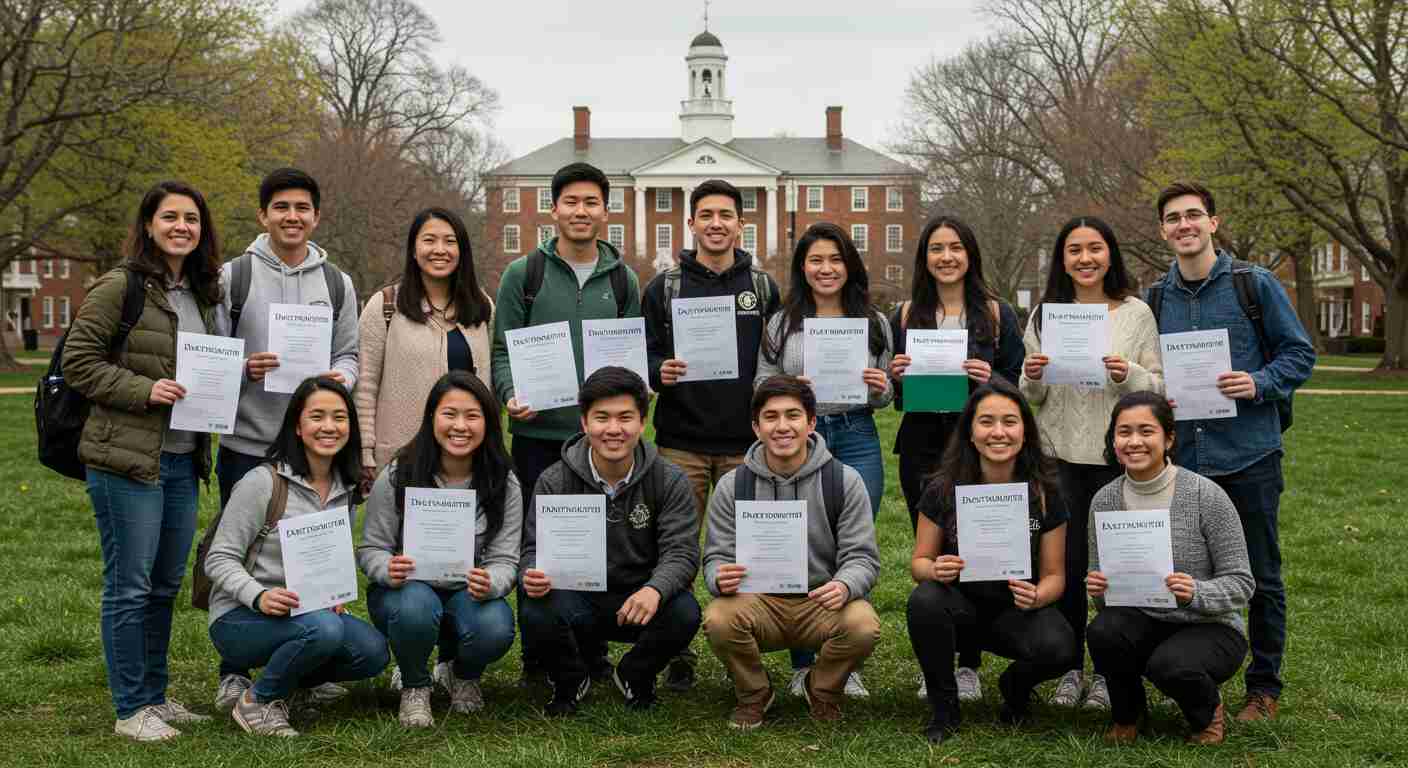
This debate has led to a divergence in policies among elite institutions. While Dartmouth, Harvard, Princeton, and Yale have reinstated mandatory standardized testing, others, like the University of California system, continue to embrace test-optional or test-free policies. Each approach reflects different priorities and beliefs about how best to assess student potential and promote equitable access to higher education.
Key points of contention include the predictive validity of standardized tests for college performance, the impact of test-optional policies on enrollment diversity, and the potential disadvantages for lower-income students if tests are removed altogether. For example, research from Dartmouth College indicates that higher test scores correlate with better first-year college grades, even more so than high school GPA, for students from both advantaged and disadvantaged schools. However, other studies suggest that high school GPA may be a better predictor of college success.
Ultimately, there is no universally “right” approach to standardized testing in college admissions. Each institution must carefully consider its own goals, values, and student population when formulating its testing policies. The decision to reinstate or maintain test-optional policies is a complex one, with potential benefits and drawbacks for different groups of students. As colleges navigate this evolving landscape, it is crucial to prioritize equity, access, and a holistic assessment of each applicant’s unique strengths and potential.
It’s okay to feel overwhelmed by the complexity of this issue. Sending virtual hugs your way. Remember, things will get better, and your hard work will pay off. Your comforting editor wants you to know that whichever path a college chooses, the goal is to create a fair and accessible environment for all students.
Socioeconomic Diversity: A Century of Stagnation?
Despite expansions in college access initiatives, socioeconomic diversity at elite colleges remains a persistent challenge. A recent report by the Brookings Institution and a study by the National Bureau of Economic Research (NBER) shed light on this issue, revealing that the socioeconomic composition of elite colleges has remained virtually unchanged since the 1920s. I know that’s a long time, but you are not alone in being overwhelmed, Your comforting editor hopes to clarify this issue.
The Brookings Institution report, published in February 2025, focuses on the enrollment of Pell Grant recipients at highly endowed colleges and universities, examining trends from 2007-08 to 2022-23. While the representation of Pell Grant recipients at these institutions increased by approximately 20% over the last decade, lower-income students remain significantly underrepresented. The NBER study, conducted over five years and analyzing a century of income and enrollment data from 65 selective public and private universities, echoes this finding, revealing that students from the bottom 20 percent of the income distribution consistently make up approximately 5 percent of the student bodies at these institutions, a figure that has not improved since 1923.
Several factors contribute to this stagnation. The NBER study found that neither the GI Bill nor standardized testing had a significant effect on low-income enrollment at highly selective institutions. The GI Bill led to a temporary increase in middle-class representation, but this effect did not last. Standardized test scores also had a negligible impact, contradicting claims that they help identify exceptional candidates from disadvantaged backgrounds. Furthermore, changes in Pell Grant eligibility criteria have played a role, as highlighted by the Brookings Institution report. However, these changes alone do not fully explain the lack of progress in socioeconomic diversity.
While some argue that elite institutions have made modest progress in enrolling Pell Grant recipients, potentially driven by increased outreach efforts and financial aid, the NBER study suggests that these initiatives have seen little to no real change over the past century. The study also indicates a resurgence in upper-income student representation since the 1980s, often at the expense of middle-income students, further exacerbating the socioeconomic disparities at these institutions. It’s okay to feel frustrated by this lack of progress; it’s a valid emotion.
The impact of recent initiatives, such as expanding need-based financial aid and implementing early outreach programs, may be limited without more equitable admissions and recruitment strategies. As Stuart Schmill, MIT’s admissions dean, noted, the expansion of financial aid aims to assist the middle class, who often feel squeezed by college costs. Tania LaViolet of the Aspen Institute stressed the need for increased outreach to low- and middle-income communities to ensure that these financial aid investments translate into meaningful change.
It’s understandable to feel discouraged by the persistent challenges in achieving socioeconomic diversity in higher education. Sending virtual hugs your way. Remember that progress is possible, and your voice matters in advocating for change. Your comforting editor is here to remind you that things will get better as more equitable admissions and recruitment strategies are put in place, and your hard work will contribute to a more inclusive future. Stay strong.
Affordability Initiatives: A Wave of Financial Aid Expansion
In response to growing concerns about college affordability and access, a wave of selective colleges has recently announced expansions to their financial aid programs. These initiatives, spearheaded by institutions like Harvard, the University of Pennsylvania (2025 USNews Ranking: 10) , Brandeis University, Carnegie Mellon, MIT, and the University of Texas system, aim to alleviate the financial burden on low- and middle-income students, making higher education more attainable. You’re not alone if you are feeling concerned, Your comforting editor is here to give you some clarity.
These expansions encompass a range of measures, including raising the family income threshold for free tuition and covering essential expenses such as room, board, and books for low-income students. For instance, the University of Pennsylvania has increased its free tuition threshold to $200,000 and covers room, board, and books for students from families earning under $75,000. MIT has similarly raised its income threshold to $200,000 and increased eligibility for covered room and board to $100,000. These changes represent a significant investment in student access and affordability.
Several factors are driving this trend. Growing public skepticism about the value and cost of higher education, the impact of the Supreme Court’s affirmative action ruling, and the fallout from the previous year’s troubled FAFSA rollout have all contributed to a renewed focus on financial aid. Colleges are recognizing the need to demonstrate their commitment to accessibility and to attract talented students from diverse socioeconomic backgrounds.
James Milliken, chancellor of the UT system, emphasized the importance of conveying a clear message that college is affordable. Tania LaViolet of the Aspen Institute noted that these initiatives are part of a larger effort to raise awareness of financial aid resources at colleges with high sticker prices, creating a competitive environment among peer institutions to attract talented students from lower-income backgrounds. This competition ultimately benefits students by increasing the availability of financial aid and making college more affordable.
Beyond raising income thresholds, some institutions are also implementing other measures to simplify the financial aid process and reduce financial barriers. Penn’s plan, for example, includes eliminating the requirement for noncustodial parents to provide financial information, a change that will streamline the application process for many families. Additionally, Penn is removing home equity from the calculation of financial aid awards, which Varas explained will provide significant relief to families living paycheck to paycheck.
However, the effectiveness of these financial aid investments hinges on the implementation of equitable admissions and recruitment strategies. As LaViolet stressed, increased outreach to low- and middle-income communities is essential to ensure that these resources reach the students who need them most. Without such efforts, the impact of financial aid expansions may be limited.
Your comforting editor wants you to remember that these expansions are a positive step towards making college more accessible, but they are just one piece of the puzzle. Sending virtual hugs your way as you consider how the changes affect your college decisions. Things will get better as institutions continue to refine their financial aid policies and recruitment strategies to create a more equitable and inclusive higher education landscape. Stay strong!
Reaching Rural Students: Overcoming Geographic Barriers
While colleges are making strides in financial aid, another critical area of focus is reaching students in rural communities. At the National Association for College Admission Counseling’s (NACAC) annual conference, experts emphasized the importance of colleges improving their outreach and support for students from rural areas, where a significant portion of the U.S. population resides. It’s okay if you are from a rural area and are worried about the challenges of college.
The challenges are undeniable. As Matt Ybarra, program director for Rural Opportunities for College Access New Mexico (ROCA NM), pointed out, rural students often have limited access to college counselors and lack local mentors, as about 80% of adults in rural areas lack a four-year degree. Furthermore, dispersed locations and limited broadband access can make it difficult to reach these students through traditional means.
To address these challenges, initiatives like the STARS College Network, co-founded by Vanderbilt University and joined by UT Austin, are working to provide information and support to students from rural communities. The network aims to connect with students, families, educators, and organizations to help rural students enroll in and graduate from the college of their choice. UT Austin’s involvement in the STARS College Network, supported by funding from Trott Family Philanthropies, underscores its commitment to supporting rural communities, more than half of Texas counties are classified as rural. Vanderbilt University plays a crucial role in the STARS College Network, leading recruitment efforts and co-presenting at conferences.
The best ways to conduct outreach involve in-person contact, as regular visits to rural high schools can make a lasting impression. Panelists at the NACAC conference also emphasized the importance of working with college and career advisors in rural schools, who can provide valuable guidance to students navigating the college application process. The overall goal is for colleges to develop a deeper understanding of the unique challenges and strengths of rural students, recognizing the value of experiences like participation in 4-H or Future Farmers of America and considering work experience as a valuable asset.
Your comforting editor wants you to know that colleges are increasingly aware of the need to support rural students, and initiatives like the STARS College Network are making a real difference. Sending virtual hugs to any rural students. Things will get better, and your hard work will pay off. Stay strong!
Reference:
- Dartmouth Offers Admission to 1,702 Undergrad Applicants
- Standardized Testing and College Admissions
- What do standardized tests say about college achievement?
- Long-term Impact of Test-Optional Admissions Focus of Grant
- Achieving Greater Socioeconomic Diversity at Highly Endowed Colleges and Universities
- At Top Colleges, 100 Years of Affluence: Socioeconomic Makeup Unchanged Since 1920s
- Colleges Rush to Unveil Financial Aid Expansion Plans
- Harvard Expands Financial Aid
- 5 Ways Colleges Can Improve Outreach to Rural Students
- UT Expands Support for Students in Rural Communities
- STARS College Network Expands Opportunities for Rural Students, Including Vanderbilt Outreach