
FSU’s APPLE Program: Cultivating Future Leaders Through Experiential Learning
Florida State University‘s Applied Politics and Policy Learning Experience, or APPLE, program, stands as a beacon for undergraduates aspiring to navigate the intricate corridors of governance and public discourse. This distinctive year-long initiative, now celebrating its third year of impactful operation, offers a meticulously crafted, three-semester journey designed to immerse students in the multifaceted world of policymaking. From the local capillaries of government to the pulsing arteries of state and national affairs, APPLE students are not merely observers but active participants, cultivating a profound understanding of civic duty and the mechanisms of governance. The program’s foundational mission is to foster active citizenship, equipping its scholars with the practical acumen and the inherent understanding necessary to engage meaningfully in the democratic process.
The structure of the APPLE program is akin to a carefully composed symphony, with each movement building upon the last to create a harmonious and comprehensive learning experience. It commences in the fall semester, where students are guided through the foundational principles of local policymaking, engaging directly with the civic leaders and stakeholders who shape their immediate communities. This initial immersion, as gentle as a summer breeze, allows for a grounded understanding of how policies translate into tangible realities at the grassroots level. As the academic year progresses into the spring semester, the tempo quickens, and students are propelled into the heart of state-level governance through the Governmental Relations Legislative Internship Program. Here, they serve as interns during the Florida legislative session, a period of intense activity that paints a vivid picture of the legislative process in action.
The program’s crescendo arrives with its capstone experience in Washington D.C. during the summer. It is here, amidst the historic monuments and the bustling nexus of national power, that APPLE students undertake internships tailored to their specific interests and career aspirations, concurrently deepening their knowledge through coursework at The Washington Center. This immersive phase solidifies the program’s commitment to providing an unparalleled, hands-on education. The success of APPLE over its initial three years, bolstered by the steadfast support of the FSU Institute for Governance and Civics, speaks volumes about its efficacy. It has demonstrably bridged the often-perceived chasm between academic theory and the pragmatic demands of the political and policy arenas, establishing itself as a truly unique and transformative initiative. This foundation is crucial as we turn our gaze towards the program’s culminating experiences in the nation’s capital.
A Glimpse into the Nation’s Capital: APPLE Students Engage with Leaders and Alumni
The culmination of the APPLE program’s immersive journey finds its students stepping onto the hallowed ground of Washington D.C., a place where the echoes of history mingle with the urgent pulse of present-day governance. This capstone experience is designed not merely as an educational excursion but as a profound immersion into the very fabric of federal policymaking. A significant milestone for the cohort was the opportunity to visit the White House, a moment that must surely have felt like glimpsing the very heart of the republic. Subsequently, the students gathered at the U.S. Capitol, a majestic edifice that has witnessed the unfolding of countless debates and decisions shaping the nation’s destiny. It was within these walls that they had the distinct privilege of meeting U.S. Representative Maxwell Frost. As the youngest member of Congress, Representative Frost offered a unique and invaluable perspective, sharing insights into the intricate dance of federal policymaking from a viewpoint forged by contemporary challenges and a fresh understanding of the electorate. His narrative, no doubt, painted a vivid picture of the realities of legislative life, demystifying the process for the aspiring leaders present.
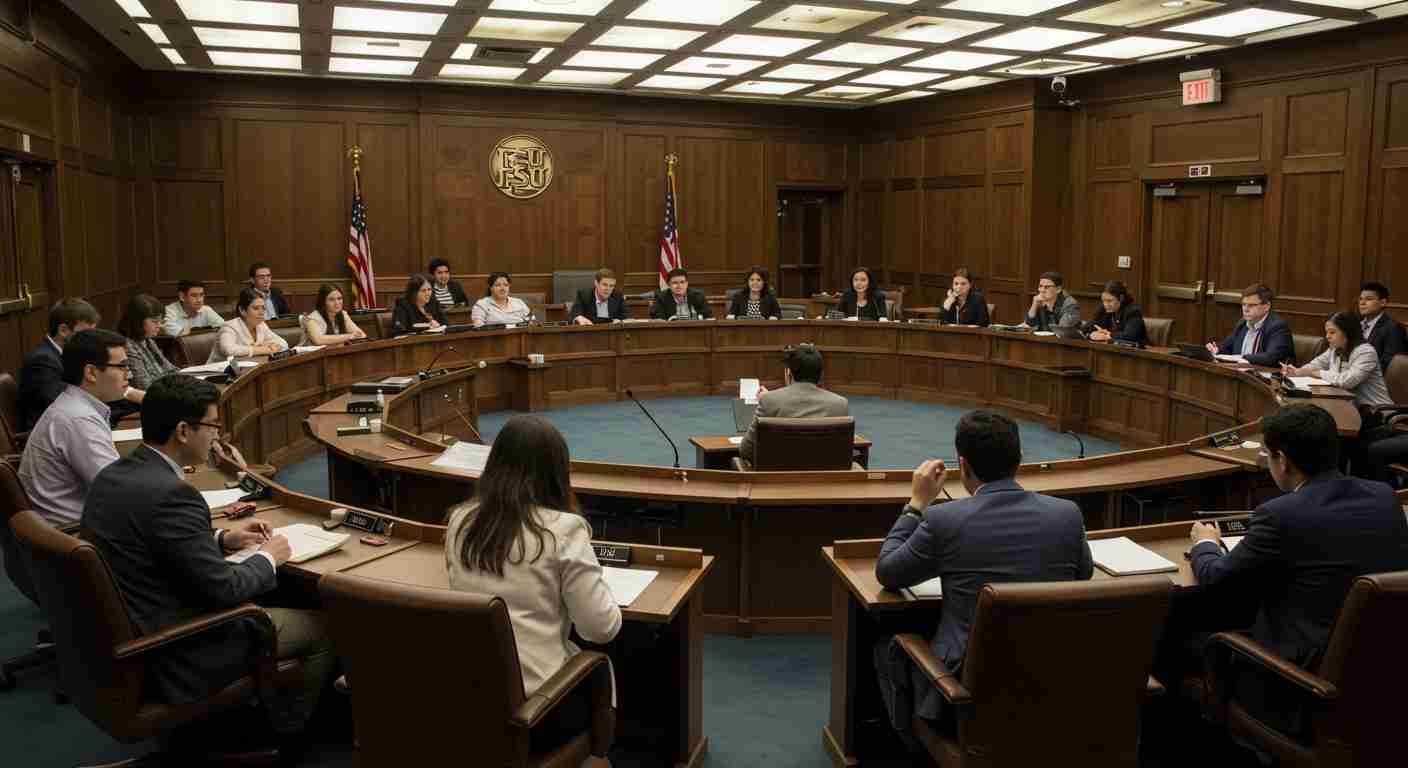
Beyond the direct engagement with elected officials, the APPLE program masterfully orchestrates encounters with its own distinguished alumni, a testament to the enduring power of the Florida State University network. These FSU graduates, now serving as congressional staffers, provided the students with a different, yet equally vital, form of guidance. Their presence offered tangible proof of the pathways forged by those who have walked the APPLE road before. Among these invaluable mentors were Trinity Tresner (’22) and Adriana Diaz (’24), both integral to Representative Maxwell Frost’s team, serving as Scheduler and Staff Assistant respectively. Khamare Garner (’22), as a Special Advisor for Senator Elizabeth Warren, brought a wealth of experience from the legislative strategy of a prominent senator. Jack Hitchcock (’24), a Legislative Correspondent for Senator Rick Scott, offered a glimpse into the communication and policy drafting that underpins senatorial work. Daniel Muniz (‘23/’24), a Legislative Aide for Representative Addison McDowell, shed light on the day-to-day support and policy expertise required in a congressional office. Dominique Yelinski (’16), holding the significant role of Deputy Policy Director for House Majority Leader Steve Scalise, provided insights into leadership within the legislative hierarchy. Finally, Edgar Barrios (’19), serving as a Communications Assistant for U.S. House Speaker Mike Johnson, offered a perspective on the critical role of messaging and public outreach in national politics.
These interactions were more than mere informational sessions; they were deeply personal exchanges, offering practical advice and nuanced career guidance. The alumni, having navigated the demanding landscape of Capitol Hill themselves, could impart wisdom that transcends textbooks, speaking to the lived experience of building a career in this dynamic environment. Their stories likely illuminated the myriad opportunities available, demystifying the often-impenetrable world of federal policy and offering a realistic view of how to begin charting one’s own course. These engagements serve as a powerful parallel to the efforts of other esteemed institutions, such as Augusta University and the University of Kentucky, which also recognize the profound impact of connecting students with the practical realities of political careers through congressional internships. The experience of FSU’s APPLE students in meeting with Representative Frost and engaging with their fellow alumni on Capitol Hill undoubtedly serves as a transformative catalyst, shaping their perspectives and illuminating the potential trajectories for their own futures in public service. It is an immersion that, as the poet John Keats might say, allows them to feel the “firm substance of an unseen world,” making the abstract principles of governance palpable and personal.
The Broader Landscape: Experiential Learning and Alumni Networks in Political Science
This artistic editor recognizes that a robust political science education extends far beyond the confines of lecture halls and academic texts. It is a vibrant ecosystem that thrives on experiential learning and the invaluable connections forged through a strong alumni network. The University of California system, for instance, champions this philosophy by ensuring a significant majority of its undergraduates engage in hands-on learning, be it through rigorous research, internships, or service-learning projects. This commitment, as exemplified by students like Allison Wang, a political science major at UC Riverside who interned at the UC Washington Center and UC Center Sacramento, allows for a profound understanding of government at multiple levels, directly translating academic knowledge into real-world application. Similarly, Washington and Lee University’s Politics Department actively encourages students to seize experiential learning opportunities, fostering a deep, nuanced understanding of political thought and practice, as seen in students like Jack Evans, who received a Fulbright English Teaching Assistantship to Uzbekistan, underscoring the department’s success in preparing graduates for impactful global careers.
The power of a well-established alumni network cannot be overstated, serving as a guiding constellation for students navigating the complexities of career development. The University of Florida‘s Beyond120 program is a sterling example of this, deliberately integrating alumni into the student experience through career “excursions” and mentorship opportunities. As CLAS alumna Alyssa Morford attests, these connections raise awareness of possibilities and can lead to profound mentorship, shaping future aspirations. The program’s success is further amplified by platforms like the University Gator Network, which directly facilitates these vital student-alumni connections, creating a symbiotic relationship where experienced graduates offer guidance, networking, and industry insights that are as precious as gold. Alfred University’s DC Purple City Student Leadership Forum provides another luminous illustration, bringing together students and influential alumni to discuss leadership and professional development in the heart of the nation’s capital. These gatherings, often facilitated by dedicated alumni like Danielle Johnson-Kutch, offer students a direct pipeline to industry knowledge and invaluable personal connections.
Furthermore, academic honor societies play a crucial role in nurturing professional growth within political science. The recent inauguration of the Alpha Nu Alpha chapter of Pi Sigma Alpha, the National Political Science Honor Society, at Carnegie Mellon University is a testament to this. This esteemed society not only recognizes scholarly achievement but also provides a platform for leadership development and networking, boasting an alumni base that includes prominent figures in politics, academia, and journalism. Membership offers expanded access to internships, scholarships, and career advancement opportunities, fostering a community dedicated to the pursuit of excellence in political science. By fostering these connections, institutions cultivate a generation of well-rounded, experienced, and well-connected individuals, mirroring the integrated approach that makes Florida State University’s APPLE program such a compelling precedent for preparing students for enduring careers in politics and policy.
The Impact of Civic Engagement and Future Directions for Applied Policy Programs
Programs like APPLE serve as vibrant crucibles for forging active citizenship and deepening the understanding of civic governance. The very act of direct engagement with political institutions, from the symbolic gravitas of a White House visit to the intimate discussions within the halls of Congress, profoundly shapes a student’s perspective. It transforms abstract democratic processes into tangible realities, much like C-SPAN’s unwavering commitment to broadcasting public affairs allows citizens to witness the machinations of government firsthand. These experiences offer a vital counterpoint to the ongoing discourse surrounding mandatory national service in the U.S. While the latter often sparks debate about compulsion versus liberty, voluntary, program-driven civic education, as exemplified by APPLE, demonstrates the profound impact of cultivated engagement. It fosters a sense of agency and responsibility, encouraging individuals to become architects of their own civic participation.
Looking ahead, the APPLE program, having successfully completed its third cohort and poised to welcome its fourth, is undeniably on a trajectory to continue its essential mission of training future leaders. Its proven track record is a testament to the synergistic relationship it cultivates between rigorous academic learning, invaluable practical experience, and the unwavering support of a dedicated alumni community. This integrated approach not only shapes impactful careers in public service but also nurtures individuals who are equipped, inspired, and ready to contribute meaningfully to the democratic tapestry.
Reference:
- FSU APPLE Program Empowers Students with Capitol Hill Engagement
- FSU APPLE Program Connects Undergraduates with Leaders and Alumni on Capitol Hill
- FSU APPLE Program Connects Students with Leaders and Alumni on Capitol Hill
- The Debate Over Mandatory National Service in the United States
- The Power of Intentional Experience: Understanding the Strategy Behind Beyond120
- Alfred University Alumni Engage Students in Leadership Discussions at DC Event
- Carnegie Mellon University Inaugurates First Class into National Political Science Honor Society
- Congressional Internships in Washington, D.C. Inspire Augusta University Students
- C-SPAN Milestones: A Chronicle of Public Affairs Broadcasting
- University of Kentucky Student Gains Valuable Experience with Internship on Capitol Hill
- UC Education Stands Out Through Hands-On Learning and Undergraduate Research
- Washington and Lee University Politics Department Highlights Student and Faculty Achievements
- Georgetown McCourt School Awards $1.5 Million in Grants to 24 Researchers for Tech and Public Policy Initiatives