
Introduction: Navigating the Seismic Shift at Penn State
Penn State University’s decision to close seven of its Commonwealth Campuses after the 2026-27 academic year marks a significant moment in the institution’s history. This move, driven by factors such as declining enrollment and considerable financial pressures, will undoubtedly reshape the university’s operational landscape and, more importantly, profoundly impact the faculty, staff, and students at the affected locations. The campuses slated for closure—DuBois, Fayette, Mont Alto, New Kensington, Shenango, Wilkes-Barre, and York—represent a tangible shift in the university’s strategic direction. In response to this transition, Penn State is implementing measures to support its workforce, including priority hiring consideration processes and various transition services. These actions are being framed within the broader context of necessary university restructuring, raising pertinent questions about the future of academic labor and the university’s commitment to its mission. This commentary aims to carefully consider the university’s approach to managing this substantial change, with a particular focus on the human element and the wider implications for the higher education sector.
The Rationale and Repercussions: Understanding Penn State’s Campus Consolidation
The rationale behind Penn State University’s decision to close seven of its Commonwealth Campuses is multifaceted, stemming from a comprehensive evaluation of enrollment trends, demographic shifts, and escalating financial pressures. The Board of Trustees’ ratification of this plan represents a strategic effort to optimize the university’s Commonwealth Campus ecosystem, consolidating investment in thirteen other locations to enhance student success and ensure long-term viability. The campuses identified for closure—DuBois, Fayette, Mont Alto, New Kensington, Shenango, Wilkes-Barre, and York—collectively account for a modest portion of the university’s overall student body, faculty, and staff, yet their closure signifies a significant recalibration of Penn State’s statewide footprint. Despite these consolidations, the university maintains its commitment to preserving the largest statewide presence among Big Ten institutions and land-grant universities nationwide.
Let’s consider this carefully: the university’s stated reasons point to a need to adapt to the evolving higher education landscape in Pennsylvania. Declining enrollments, particularly in the regions served by these seven campuses, have contributed to financial strains. Maintaining these institutions incurs substantial annual costs, estimated to include approximately $40 million for direct financial support and overhead, alongside an estimated $200 million in deferred facility upgrades needed to keep them operational. These financial realities, coupled with shifting demographics and increasing competition, necessitated a re-evaluation of resource allocation. President Neeli Bendapudi has articulated that this plan aims to redefine Penn State’s land-grant mission, ensuring its campuses remain competitive and responsive to contemporary student and employer needs.
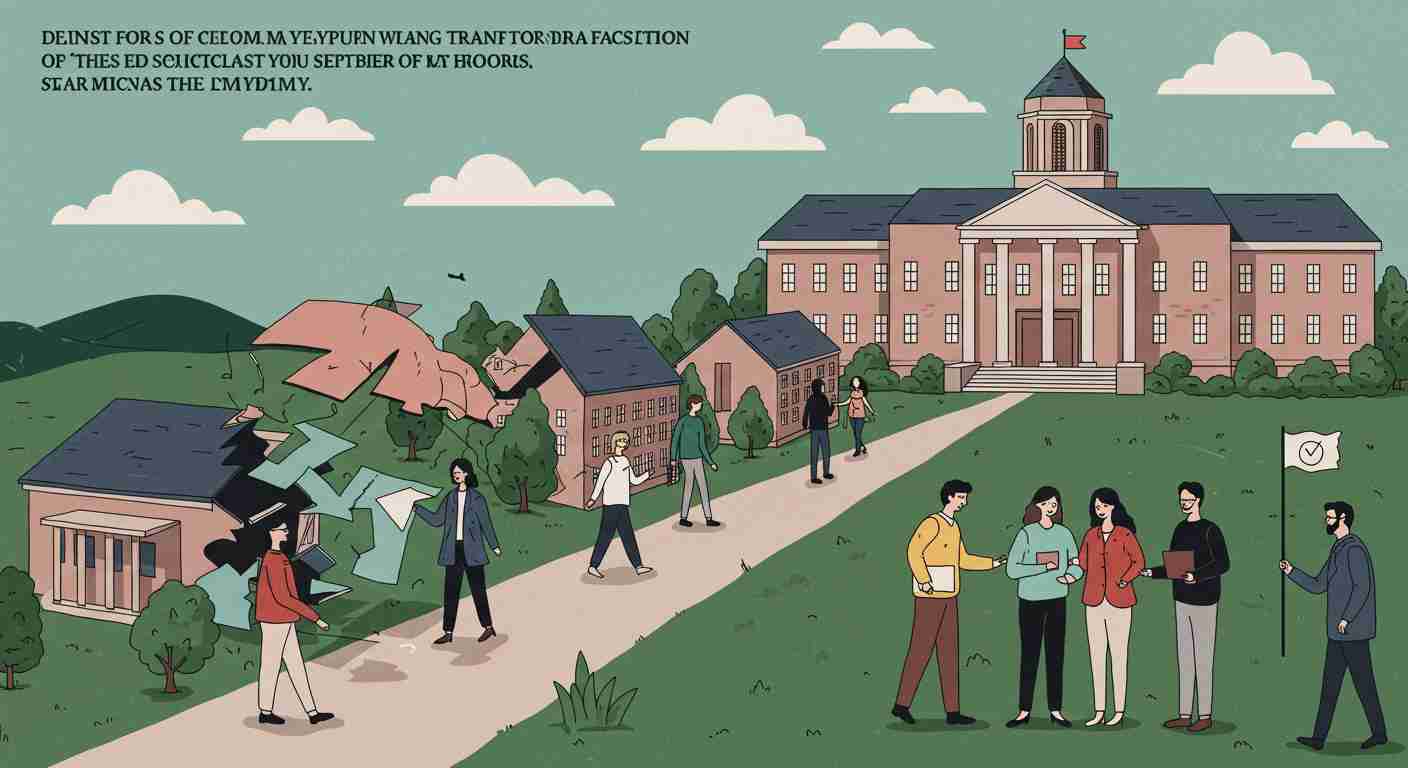
However, the decision has not been without considerable criticism and concern from various stakeholders, including faculty, staff, and former trustees. Many voice apprehension regarding the impact on rural and nontraditional students who often rely on these regional campuses for accessible education. These institutions are frequently lifelines for students who may face significant challenges in relocating further from home, particularly those from lower-income backgrounds. Critics argue that the personalized learning experiences and community integration offered at these smaller campuses cannot be easily replicated in larger, consolidated settings. Some faculty members feel that the decision overlooks the unique value and specialized programs offered at specific campuses, such as Mont Alto’s forestry program, and that the university’s land-grant mission, which emphasizes accessibility and service to all citizens of Pennsylvania, is being undermined.
There is a palpable concern that the closures may not represent a last resort, with some suggesting that alternative solutions were not adequately explored or that crucial data was not fully shared. The emotional toll on affected communities is also a significant factor, with campuses often deeply embedded in their local fabric. The perceived disregard for this community connection and history has led to strong emotional reactions. The faculty senate and various advocacy groups, including the Penn State Faculty Alliance and the American Association of University Professors, have publicly voiced objections, petitioning the university to halt the closure process. These groups highlight a perceived lack of transparent analysis regarding the broader financial, educational, and community impacts, questioning the “data-driven” nature of the administration’s decisions. They advocate for a more collaborative and transparent approach, emphasizing the dignified and fair treatment of employees who contribute to the supportive learning communities at these campuses. The narrative from these critics suggests that the university’s decision-making process has been “fast-tracked” and conducted with insufficient engagement of those most directly impacted, particularly Commonwealth Campus faculty whose on-the-ground knowledge could inform better outcomes.
Simply put, while the university leadership presents the closures as a strategic necessity for long-term sustainability and enhanced student success, a significant portion of the university community perceives it as a move that compromises its foundational mission and disproportionately harms vulnerable student populations and dedicated staff. The differing perspectives underscore the complexity of balancing fiscal realities with the enduring principles of a public, land-grant university.
Supporting the Transition: Priority Hiring and Employee Support Mechanisms
First, let’s consider the human resources strategies and support systems Penn State is implementing for its affected employees. The university’s commitment to assisting faculty and staff through this transition is demonstrated through carefully designed priority hiring consideration processes. These processes are intended to provide affected employees with a fair and prioritized opportunity to secure new roles within the Penn State system.
Specifically, for full-time staff and non-tenure-line (NTL) faculty positions across all Penn State locations, a seven-calendar-day exclusive application period will be initiated. This ensures that employees from the seven closing campuses—DuBois, Fayette, Mont Alto, New Kensington, Shenango, Wilkes-Barre, and York—have the first chance to apply for any open full-time staff or NTL faculty positions. This proactive measure aims to offer a direct pathway for internal mobility and support.
The staff priority hiring consideration process includes a guarantee of an interview for the eligible applicant who holds the most seniority, determined by their most recent full-time hire date. This applies provided they submit their application through Workday during the initial seven-day priority posting period and meet the minimum qualifications for the vacancy. If the most senior applicant is not ultimately hired for the position, the process continues to the next most senior qualified applicant from a closing campus. This sequential consideration is maintained until a closing-campus applicant is selected or until all eligible candidates from those campuses have been interviewed and not chosen. Only then will applications from other candidates, not directly affected by the closures, be considered.
Similarly, eligible full-time NTL faculty members who are in good standing and apply within the priority period are assured that their application materials will undergo a thorough review. Should they meet or exceed the stated qualifications for an academic opportunity, they will receive priority consideration for an interview. Applications submitted by these priority NTL faculty members will be reviewed, and a hiring decision will be made for these individuals before any external candidates or other Penn State applicants are considered for the same roles.
Renata Engel, interim vice president for Commonwealth Campuses and executive chancellor, articulated the university’s dedication, stating, “Supporting our dedicated faculty and staff while prioritizing student success will remain our key focus over the next two years.” She further emphasized the university’s commitment to engaging with, listening to, and providing meaningful assistance to impacted employees. Jennifer Wilkes, vice president for Human Resources and chief human resources officer, underscored this sentiment by highlighting that these processes offer an opportunity to develop and utilize new methods to support as many impacted employees as possible while concurrently meeting the university’s diverse hiring needs. The Penn State HR talent acquisition team is poised to actively assist hiring units in conducting efficient and successful searches.
To facilitate understanding and address potential concerns, Penn State Human Resources is organizing two virtual information sessions. These sessions are scheduled for June 30, 2025, with one session dedicated to NTL faculty from closing campuses (11 a.m. to noon) and another for staff (1 p.m. to 2 p.m.). Attendees will receive detailed information about the priority hiring processes and will have the opportunity to ask questions. Recordings of these sessions will be made available for later viewing, ensuring accessibility for all affected employees.
Furthermore, resources are being provided to assist job seekers at the closing campuses. These include HR job aids that offer clear instructions for setting up Workday alerts and outline the internal application process. The development of these priority hiring considerations was a collaborative effort, reflecting input from a broad spectrum of university stakeholders. This collaborative approach involved the Employee Transition Workstream, leadership from Human Resources and the Office of the Vice President for Commonwealth Campuses, the Office of Faculty Affairs, chancellors from the closing campuses, the Talent Acquisition unit, the University Faculty Senate, and the University Staff Advisory Council. Penn State plans to continue this collaborative engagement on all initiatives related to campus closures, remaining adaptable and responsive to anticipated employee transitions.
In the broader context of employee transition support services in higher education, Penn State’s approach aligns with a growing recognition of the need for structured support during institutional restructuring. While many universities face similar challenges, the specificity of a seven-day exclusive application window and seniority-based interview guarantees for staff represent a deliberate effort to prioritize those most directly affected. General trends in the sector often involve offering general career counseling, outplacement services, and broad internal transfer opportunities. Penn State’s approach, by contrast, provides a more immediate and targeted pathway into available positions, directly addressing the concern of job security for its impacted workforce. This focus on direct employment opportunities within the university system is a notable aspect of its transition support strategy, aiming to retain valuable institutional knowledge and experience.
Broader Implications and Future Considerations for Academic Labor
The wider implications of Penn State’s campus closures and its HR strategies extend far beyond the immediate impact on its workforce. This situation is symptomatic of broader trends coursing through the landscape of higher education, characterized by persistent funding uncertainties and the increasing precarity of academic employment. As observed in related articles, numerous universities are grappling with similar restructuring efforts, often driven by economic pressures and shifting institutional priorities. The decisions made by institutions like Penn State reflect a larger recalibration of academic labor, where the traditional employment models are being re-examined under the weight of fiscal constraints and evolving demands.
Let’s consider this carefully: the precarity of academic employment is a well-documented phenomenon, with a growing proportion of faculty and staff holding temporary, contract-based positions that lack the security and benefits of tenured or permanent roles. This trend is exacerbated by the financial challenges faced by many public universities, which are increasingly pressured to operate more like businesses, often prioritizing cost savings and efficiency. The related article on Western Sydney University, for instance, highlights how austerity measures and government policy shifts can lead to substantial job cuts and restructuring, directly impacting academic staff. Similarly, the analysis of parallel crises in US and UK higher education points to a significant restructuring of academic labor, where ideological challenges to certain academic fields and funding uncertainties force institutions to make difficult choices that often result in job losses and a greater reliance on a contingent workforce.
In this context, Penn State’s implementation of priority hiring processes for its affected staff and non-tenure-line faculty can be viewed as a specific response to these overarching trends. While these measures are designed to support employees through the immediate transition, they also underscore the inherent instability that can accompany institutional change in higher education. The challenge for universities undergoing similar transformations lies not only in executing necessary structural adjustments but also in doing so in a manner that upholds their core missions and values.
Simply put, transparent communication, genuine employee engagement, and fair transition processes are paramount. When institutions are open about their challenges, actively involve their workforce in decision-making where possible, and provide equitable support for those affected, it fosters trust and mitigates some of the negative impacts of change. The Penn State Faculty Alliance’s petition, which criticized the perceived lack of transparency and engagement, serves as a reminder of the importance of these principles.
Looking forward, universities must adopt a proactive and human-centered approach to institutional change. This involves not only strategic financial planning but also a deep commitment to the well-being and professional development of their employees. Rather than viewing staff and faculty solely as resources to be managed, institutions should recognize them as vital contributors to their educational mission. This might involve investing in retraining and upskilling initiatives, exploring innovative employment models that offer greater security, and fostering a culture of collaboration and shared governance. By prioritizing these elements, universities can navigate the complex challenges of restructuring while remaining true to their commitment to education, research, and service, ultimately ensuring a more sustainable and equitable future for academic labor.
Reference:
- Penn State Staff and Faculty React to Commonwealth Campus Closures
- Penn State Trustees Approve Plan to Close Seven Commonwealth Campuses
- Penn State Faculty Alliance Urges University to Halt Campus Closure Process
- Penn State Implements Priority Hiring for Staff and Faculty at Closing Campuses
- Penn State University Board Approves Closure of Seven Commonwealth Campuses
- Penn State Implements Priority Hiring for Employees at Closing Campuses
- Penn State Implements Priority Hiring for Employees at Closing Campuses
- Penn State Implements Priority Hiring for Employees at Closing Campuses
- U.S. Universities Freeze Hiring Amidst Federal Funding Uncertainty
- Penn State Implements Priority Hiring for Employees at Closing Campuses
- Hidden Half-Billion Dollar Program Failing Students with Disabilities in Job Training
- West Virginia Schools of Diversion and Transition Provide Educational Services to Over 6,000 Juveniles and Adults
- Utah State University Merges Colleges Amidst $12.6 Million Budget Cut
- Labor Government’s Austerity Measures Lead to Major Job Cuts and Restructuring at Western Sydney University
- Parallel Crises in US and UK Higher Education Signal Major Restructuring of Academic Labour
- Navigating the Future of the U.S. Department of Education: A Guide for Journalists
- Closing the Experience Gap: A Critical Challenge for Organizations and Workers
- College Recruiting Adapts to Hybrid Strategies Amid Student Demand for In-Person Interaction