
The Transformative Power of Undergraduate Research Programs: A Case Study from Cornell University
On August 14, 2024, Cornell University launched its Bowers Undergraduate Research Experience (BURE) program, offering 60 undergraduate students an immersive research opportunity. This 10-week program is designed to engage students full-time in research during the summer, helping them explore potential career paths. Among the participants is James Kim, a student majoring in Computer Science and Mathematics, who, under the guidance of Professor Amy Kuceyeski at Weill Cornell Medical Center, utilized machine learning models to analyze brain scans and predict the onset of neurological diseases. Kim expressed that the BURE program allowed him to accomplish research tasks that would be difficult to achieve during the academic semester, motivating him to pursue a Ph.D. in Computer Science with a focus on artificial intelligence and neuroscience.
Another participant, Joyce Yang, developed a robotic system in the EmPRISE lab aimed at safely transferring patients from beds to wheelchairs. She believes that this research is not only challenging but could also have a positive impact on nursing practices. The BURE program also includes weekly lectures and social activities, providing students with insights into the life of researchers and culminating in a showcase of their research findings.
Additionally, the BURE Next initiative focuses on providing research opportunities for underrepresented undergraduate students, encouraging broader participation in research. The BURE program opens applications every summer, allowing students from the Bowers College of Computer and Information Science at Cornell University to apply through the college’s website. This program not only offers students invaluable research experience but also lays the groundwork for their future academic and professional development.
Impact of Undergraduate Research Programs on Career Development
The BURE program at Cornell University exemplifies the significant impact that undergraduate research programs can have on students’ career trajectories. Research opportunities at institutions like the University of Illinois Urbana-Champaign’s Siebel College of Computer and Data Science are designed to encourage students to engage in cutting-edge research early in their academic careers. The college offers various undergraduate research initiatives, including summer research projects and academic year research opportunities, allowing students to collaborate closely with faculty and gain practical experience.
One notable initiative is the Computer Science Student Ambassador/Research Scholar (CS STARS) program, which provides a platform for undergraduates interested in research to not only participate in research but also take on leadership roles within the department, fostering community building. The Illinois Scholars Undergraduate Research (ISUR) program focuses on research-oriented seminars and paid research opportunities, employing an apprenticeship model where students work closely with faculty for mentorship.
Specific research projects, such as the Clare Boothe Luce Scholars program, support undergraduate women in science, mathematics, and engineering fields, selecting eight scholars annually and providing funding. The C3SR-Undergraduate Artificial Intelligence Research project, a collaboration between IBM and ISUR, funds undergraduate research in artificial intelligence and cognitive computing, covering both theoretical and practical applications.
Moreover, the National Center for Supercomputing Applications (NCSA) offers the SPIN program, providing academic internship opportunities for undergraduates to engage in research in supercomputing, visualization, and data analysis, with students earning paid internships for five hours a week.
In terms of semester research, the CS Job Portal provides employment opportunities for course assistants and undergraduate research positions, while the PURE (Promoting Undergraduate Research in Engineering) program connects first- and second-year students with graduate mentors to help them kickstart their research careers.
Summer research initiatives include the DaRin Butz Scholars program, which provides ten weeks of summer research funding specifically for undergraduate women, employing a learning-apprenticeship model in fields such as computer science, aerospace, engineering, physics, or astronomy. The NCSA’s INCLUSION program offers ten-week research opportunities for students from underrepresented groups, aiming to conduct socially impactful research through open-source software development.
Additionally, the Summer Research Program (SRP) allows students to collaborate with university faculty on cutting-edge research while participating in professional development projects to enhance their research skills and competitiveness for graduate school applications. The Mind in Vitro Undergraduate Summer Research Program enables undergraduates to work alongside faculty and graduate students on projects related to Mind in Vitro, while also participating in networking events, social activities, and seminars.
To further promote undergraduate career development, the Grainger College of Engineering has established the Mentoring Undergraduates in Science and Engineering (MUSE) program, providing undergraduates with opportunities for career development, research, and paper guidance. Each semester, the Grainger College of Engineering hosts an engineering research expo for researchers to share their findings and provide a platform for companies to recruit research personnel. Annually, undergraduate research symposiums are held on campus for undergraduates to showcase their research outcomes, gaining experience in presenting their work to a broader audience. Through these diverse research opportunities, the University of Illinois is committed to nurturing future research talent and advancing the fields of science and technology.
Role of Machine Learning in Medical Research
The BURE program’s focus on machine learning applications in medical research, as demonstrated by James Kim’s work, highlights the growing importance of this technology in the healthcare sector. As technology continues to advance, the medical industry is actively adopting machine learning (ML) techniques to enhance the efficiency and quality of healthcare services. According to Statista, the global AI market in healthcare was valued at over $11 billion in 2021, with projections to reach $187 billion by 2030, reflecting a compound annual growth rate of 37%. The applications of machine learning in healthcare primarily include personalized treatment, fraud detection, early disease detection, robotic-assisted surgeries, prescription error analysis, clinical research and trial assistance, drug discovery and development, and automated image diagnostics.
Personalized treatment is one of the key applications of machine learning in healthcare. By analyzing patients’ medical histories, symptoms, and test results, healthcare providers can develop tailored treatment plans. Machine learning can also assist in identifying whether patients need medication adjustments, ensuring appropriate treatment from the outset.
In the realm of fraud detection, machine learning can identify invalid insurance claims, reducing the financial losses caused by medical fraud. According to the National Health Care Anti-Fraud Association (NHCAA), medical fraud results in losses of up to $300 billion annually. Organizations like the Harvard Public Health Institute utilize machine learning technologies to identify suspicious claims behavior.
Early disease detection is another significant advantage of machine learning. By comparing new data with historical data, healthcare providers can identify diseases earlier, allowing for optimal treatment plans. Robotic-assisted surgeries enhance the accuracy and speed of surgical procedures, reducing recovery times and improving overall patient experiences.
Furthermore, machine learning can analyze prescription errors, helping healthcare providers identify potential medication mistakes and thereby lowering health risks for patients. For instance, Brigham and Women’s Hospital utilized a machine learning system to identify over 10,000 potential prescription errors, saving $1.3 million in healthcare costs.
In clinical research and drug development, machine learning can accelerate the discovery and development processes, reducing costs. For example, Atomwise employed deep learning techniques to discover two drugs for treating the Ebola virus within a day, a task that typically takes years.
Machine learning is also widely applied in the automated diagnosis of medical images, assisting healthcare providers in identifying conditions such as liver and kidney infections and tumors. The University of Virginia (2024 USNews Ranking: 24) Hospital has utilized machine learning tools to analyze pediatric biopsy images, accurately distinguishing between different diseases.
Despite the promising applications of machine learning in healthcare, challenges remain, including data quality, patient safety, data bias, and privacy concerns. The accuracy and standardization of medical data directly impact the decision-making quality of machine learning algorithms, making it crucial to ensure data reliability.
Looking ahead, machine learning is poised to play an even greater role in the healthcare industry, helping to address current medical challenges and enhance patient experiences and service efficiency. Companies like Appinventiv are dedicated to assisting healthcare institutions in adopting machine learning technologies, driving the digital transformation of the healthcare sector. By collaborating with Appinventiv, healthcare organizations can achieve more efficient operations and provide higher-quality patient services.
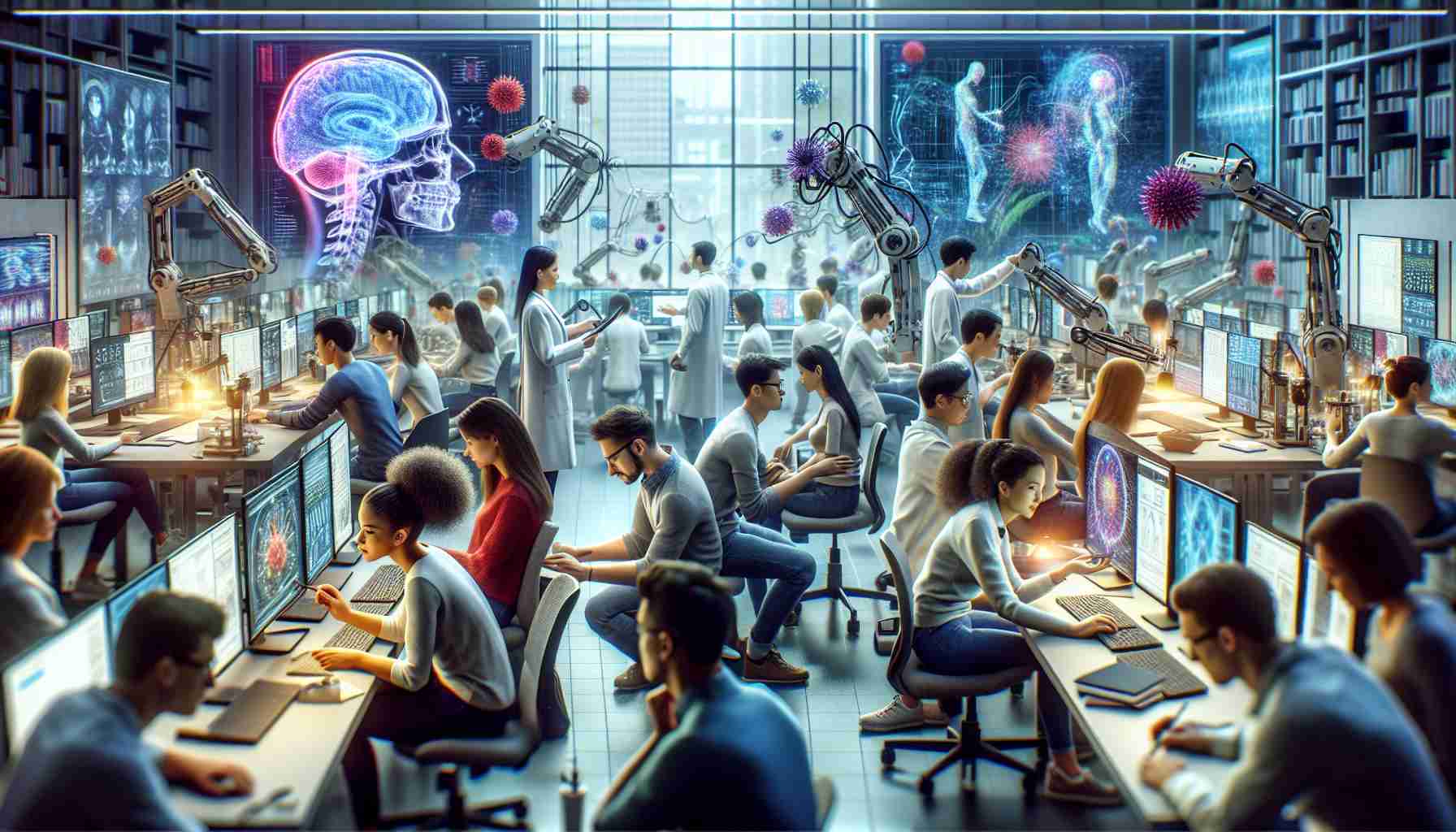
Challenges and Innovations in Healthcare Robotics
The BURE program’s emphasis on healthcare robotics, as illustrated by Joyce Yang’s project, aligns with the broader trends in the medical field, where robotics is increasingly being integrated into healthcare solutions. At the Global Health Week in Abu Dhabi on June 28, 2024, the future of the healthcare industry was showcased, with deep technology providing solutions to some of the world’s most significant medical challenges. The event attracted numerous health leaders, investors, and policymakers, highlighting cutting-edge technologies shaping the future of healthcare.
Artificial intelligence (AI) and deep learning are transforming the operations of the healthcare industry. Through deep learning algorithms and large language models, healthcare professionals can better analyze patient data and find solutions to complex problems. Raymond Fryrear II, head of global digital solutions at Johnson & Johnson, noted that the application of AI is enhancing diagnostic accuracy and the formulation of personalized treatment plans. Institutions like the University of Virginia and Imperial College London are leveraging AI technologies for drug development and medical device innovation.
The combination of mixed reality and wearable devices is also enhancing equity for healthcare users. By utilizing biometric technology and immersive environments, accessibility to healthcare services has improved. Platforms like HintVR in the United States are changing the way clinical training is conducted, while the Oregon Reality Lab is applying virtual reality technology in mental health treatment.
Moreover, the application of robotics in healthcare is becoming increasingly widespread. Johnson & Johnson’s Monarch flexible robotic system assists in analyzing cancer lesions for early intervention, improving treatment efficiency. The integration of robotics and AI is driving the diversification of medical technologies.
Telehealth services and application technologies are reshaping the landscape of personalized healthcare. The proliferation of smartphones has accelerated the growth of telehealth services, particularly during the COVID-19 pandemic, where telehealth became a model for safe medical service delivery. By 2025, the global telehealth market is expected to reach $520.8 billion.
Finally, advancements in cell and gene therapies are profoundly changing the diagnosis and treatment of diseases. Dr. Alireza Haghighi from the Harvard International Center for Genetic Diseases emphasized that the gap between genomics research and clinical applications is narrowing, with global collaboration being key to advancing health.
The Global Health Week in Abu Dhabi provided a platform for policymakers, healthcare practitioners, and the private sector to collaborate in addressing current and future healthcare challenges. Through the application of deep technology, the healthcare industry is poised to achieve more equitable health outcomes and drive global health progress.
Importance of Diversity in Research Opportunities for Underrepresented Groups
The BURE program’s commitment to diversity, particularly through the BURE Next initiative, underscores the critical importance of inclusivity in research opportunities. The National Institutes of Health (NIH) emphasizes the necessity of achieving diversity and inclusion in clinical trials. Clinical trials are essential for evaluating the impact of interventions—such as drugs, devices, and behavioral methods—on health outcomes. To ensure the generalizability of research findings, clinical trials must include participants from diverse racial, gender, age, and socioeconomic backgrounds. Historically, clinical trials have often recruited predominantly white males, leading to biases in understanding certain diseases and affecting medical decision-making and treatment efficacy.
During the COVID-19 pandemic, the diversity of recruitment in vaccine trials was crucial to ensuring the effectiveness and safety of vaccines across different populations. Research has shown that vaccines exhibit similar safety and efficacy across various racial and ethnic groups, bolstering public confidence in vaccination efforts.
The NIH’s “Strategic Plan for Minority Health and Health Disparities 2021-2025” explicitly outlines goals for ensuring appropriate representation of minority and other health disparity populations in clinical research. The plan aims to increase the proportion of diverse participants in NIH-funded clinical research to 40% by 2030.
Furthermore, the NIH is dedicated to addressing historical mistrust in clinical research, emphasizing the importance of building trust with communities. By collaborating with community members, researchers can better understand and address health disparities.
Participation of gender and racial minorities in clinical trials is also vital. The NIH’s Revitalization Act of 1993 mandated the inclusion of women and minorities in clinical research to ensure that research findings reflect real-world diversity. Despite this, many studies still fail to adequately consider socioeconomic status (SES), which significantly impacts health outcomes. Research indicates that less than 15% of clinical trials report participants’ SES information, limiting the generalizability of findings.
The NIH supports diversity and inclusion in clinical trials through various resources and initiatives, including funding research projects aimed at increasing minority participation. Through these efforts, the NIH seeks to advance scientific discovery and promote social justice and health equity. In summary, diversity and inclusion in clinical trials not only enhance research quality but also ensure that all communities benefit from scientific advancements.
Conclusion
The Bowers Undergraduate Research Experience program at Cornell University serves as a powerful example of how undergraduate research initiatives can shape students’ academic and professional futures. By providing immersive research opportunities, such as those undertaken by James Kim and Joyce Yang, the program not only fosters individual growth but also contributes to the advancement of critical fields like machine learning in medical research and healthcare robotics.
The broader implications of such programs extend to the importance of diversity in research opportunities, particularly for underrepresented groups. As highlighted by the NIH’s initiatives, ensuring diverse participation in clinical trials and research projects is essential for producing equitable health outcomes and advancing scientific knowledge.
In a rapidly evolving healthcare landscape, the integration of machine learning and robotics presents both challenges and opportunities. As institutions like Cornell University and the University of Illinois Urbana-Champaign continue to invest in undergraduate research programs, they are not only preparing the next generation of researchers but also addressing pressing healthcare challenges through innovation and collaboration.
Ultimately, the commitment to fostering diverse research opportunities and embracing technological advancements will play a crucial role in shaping the future of healthcare and ensuring that all communities benefit from scientific progress. The BURE program exemplifies this vision, paving the way for a more inclusive and innovative research environment that empowers students to make meaningful contributions to society.