
Introduction to AI in Higher Education
As we dive into the significance of artificial intelligence (AI) in higher education, it’s impossible to ignore the strides being made by institutions like the University of Florida (UF). Celebrating October as AI Month is more than just a catchy theme; it’s a bold declaration of UF’s ambition to become the leading AI university in the U.S. With plans to hire over 100 professors dedicated to AI across diverse disciplines, UF is not merely dipping its toes into the AI pool but is instead diving headfirst into the deep end. This initiative, culminating in the inaugural AI Days event, is a vibrant call to action for students, faculty, and staff to engage with AI on multiple levels.
The implications of integrating AI into academia are profound and far-reaching. As AI technologies evolve, the educational landscape must adapt to prepare students for a workforce that increasingly relies on these tools. AI’s role in higher education is not just about teaching students how to code or analyze data; it’s about fostering a culture of innovation and critical thinking that transcends traditional boundaries. David Reed, UF’s associate provost for strategic initiatives, aptly noted that the university is committed to ensuring every student understands how AI can be applied in their respective fields. This is crucial as we navigate an era where AI is not just a tool but a transformative force shaping industries.
The integration of AI into educational frameworks presents both opportunities and challenges. On one hand, it offers an unprecedented chance to customize learning experiences, making education more accessible and engaging. Imagine AI-driven platforms that adapt to individual learning styles, providing personalized resources and feedback in real-time. This could revolutionize how students interact with course material, fostering a deeper understanding and retention of knowledge. However, this also raises pressing questions about equity and access. As institutions rush to adopt AI technologies, there’s a risk that disparities could widen, leaving some students behind. It’s essential for universities to approach AI integration with a commitment to inclusivity, ensuring that all students, regardless of background, can benefit from these advancements.
Moreover, the ethical implications of AI in education cannot be overlooked. As AI tools become more prevalent, concerns about data privacy, algorithmic bias, and the potential for academic dishonesty emerge. A recent study highlighted that a significant number of students use AI in ways that contravene school policies, indicating a disconnect between institutional guidelines and student behavior. This points to a critical need for universities to develop comprehensive ethical frameworks that govern AI use in academic settings. By fostering a culture of transparency and accountability, institutions can better prepare students for the ethical dilemmas they may face in their professional lives.
In light of these developments, it’s clear that universities must not only embrace AI but also lead the conversation around its responsible use in education. As we move toward a future where AI becomes integral to the learning experience, the call for interdisciplinary collaboration becomes even more urgent. Institutions like UF are setting the stage for this by creating environments where students from various disciplines can engage with AI technologies, fostering a diverse range of perspectives and solutions. This collaborative spirit is essential for cultivating the next generation of innovators who will navigate the complexities of a world increasingly shaped by AI.
As we reflect on the broader implications of AI integration in higher education, it’s evident that the journey is just beginning. Universities must continue to adapt, innovate, and engage with both the opportunities and challenges presented by AI. By doing so, they can not only enhance educational outcomes but also prepare students to thrive in an AI-driven future. The excitement surrounding initiatives like UF’s AI Month and AI Days is a testament to the potential of AI in academia, and it’s a thrilling time to be part of this transformative journey.
The Rise of AI-Focused Institutions
The transition towards AI-focused institutions is not merely a trend; it represents a fundamental shift in how higher education operates. As universities like UF take the lead, the implications of this transformation are profound. Studies conducted by institutions such as Elon University and Inside Higher Ed reveal a landscape ripe with both potential and challenges. The findings indicate that while students are eagerly adopting AI tools—approximately 89% of academic leaders believe that at least half of their students utilize generative AI for coursework—the integration of these technologies into teaching practices is lagging behind. Only 62% of leaders estimate that less than half of faculty members are incorporating AI into their curricula. This discrepancy raises important questions about institutional readiness and the support systems in place for faculty to effectively engage with AI.
The challenges faced by academic leaders in this integration process are multifaceted. Resistance among faculty, concerns regarding the reliability of AI outputs, and fears about diminishing student learning outcomes all contribute to a cautious approach toward AI adoption. Yet, the potential benefits for students and faculty alike are significant. Institutions that embrace AI can enhance student engagement through personalized learning experiences, streamline administrative tasks, and even foster innovative research collaborations. The survey findings are telling—91% of leaders believe AI tools will enhance and customize learning experiences, while 75% anticipate improvements in student research skills. This optimism underscores a critical point: the successful integration of AI can lead to a more dynamic and responsive educational environment.
However, the implications of AI in education extend beyond mere technological enhancement. As AI tools become more embedded in the academic fabric, ethical considerations come to the forefront. The rise of academic dishonesty linked to AI use is a growing concern, with 59% of leaders reporting an uptick in cheating since the advent of these tools. This highlights the urgent need for universities to establish clear guidelines and ethical frameworks governing AI usage. The challenge lies not only in enforcing these policies but also in fostering a culture of integrity and responsibility among students. Institutions must prioritize conversations about the ethical dimensions of AI, ensuring that students are not only consumers of technology but also informed and responsible users.
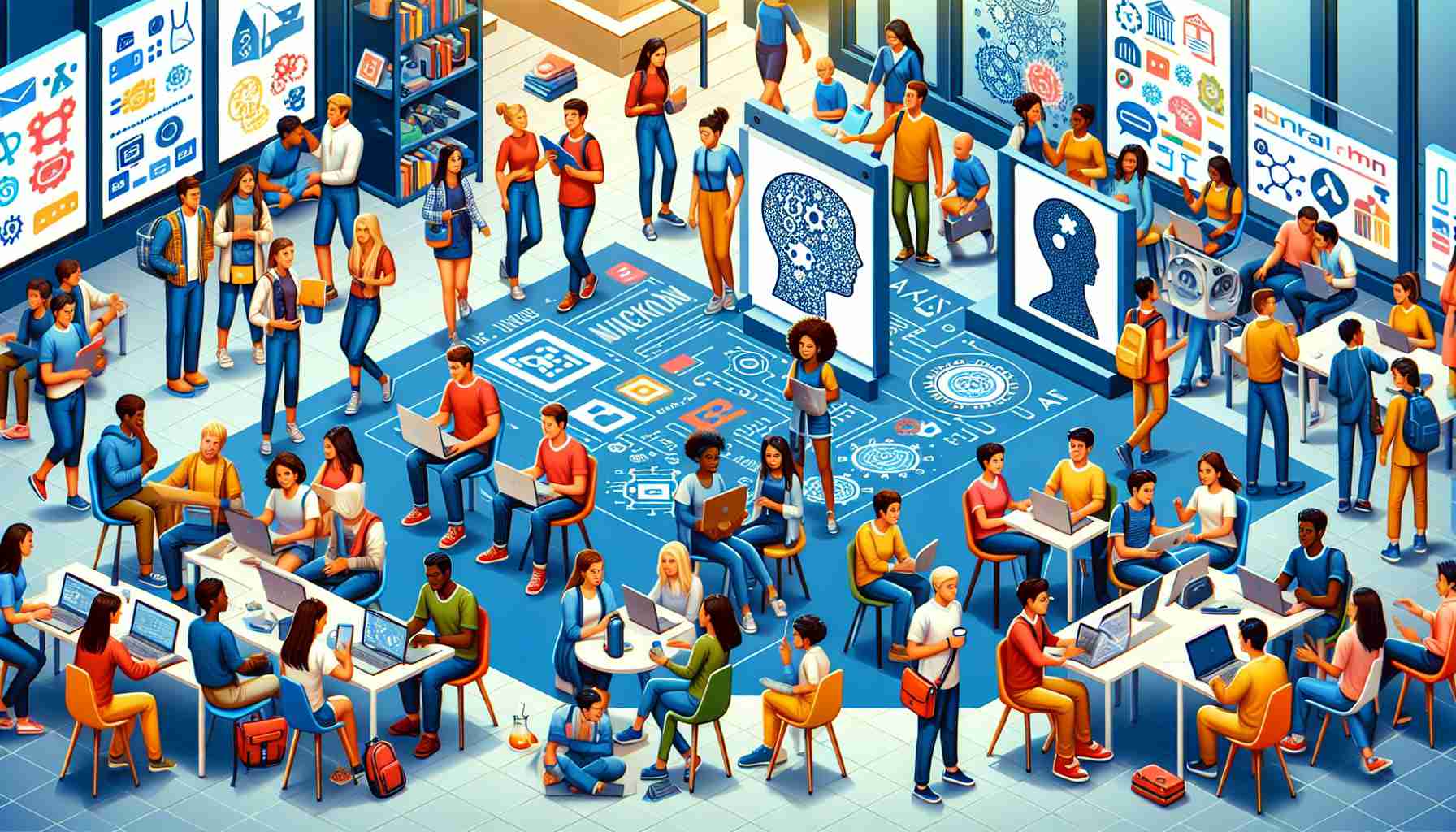
Moreover, as universities strive to position themselves as leaders in AI education, they must also confront the issue of equity. The potential for disparities in access to AI resources and training is a pressing concern. Institutions must be intentional about creating inclusive environments where all students can benefit from AI advancements, regardless of their backgrounds. This means investing in educational resources that demystify AI and provide equitable access to training and tools. By doing so, universities can help ensure that the next generation of graduates is not only technologically proficient but also equipped to navigate the ethical and social implications of AI in their respective fields.
The call for interdisciplinary collaboration is paramount in this context. As universities like UF and others across the nation explore innovative AI initiatives, they must create spaces that encourage diverse perspectives and cross-disciplinary engagement. The integration of AI education across various academic disciplines not only enriches the learning experience but also prepares students to tackle complex challenges in an increasingly AI-driven world. Programs that bring together students from engineering, business, healthcare, and the humanities can foster a holistic understanding of AI’s impact and applications, ultimately leading to innovative solutions that transcend traditional boundaries.
As we look ahead, the landscape of higher education is undeniably changing. The integration of AI presents both challenges and opportunities, and institutions must navigate this terrain with foresight and responsibility. By embracing AI as a transformative force, universities can enhance educational outcomes, prepare students for the workforce of the future, and lead the charge in ethical AI practices. The enthusiasm surrounding initiatives like UF’s AI Month and the broader movement towards AI-focused institutions signals a thrilling time for academia—a time where the possibilities are as vast as the technologies themselves. As the editor, I can’t help but feel excited about the future of education in this AI-infused era. The journey is just beginning, and the potential for innovation is boundless.
Integrating AI Education Across Disciplines
As we explore the integration of AI education across various academic disciplines, it becomes clear that institutions are taking significant strides to ensure that students from all backgrounds are equipped with essential AI skills. The Milwaukee School of Engineering (MSOE) is a prime example of this commitment, recently announcing the establishment of a new $76.5 million AI learning center. This ambitious project aims to enhance AI programming and address the skills gap identified in the industry. MSOE’s President, John Walz, has articulated the school’s vision of becoming a national leader in applied AI education, which is not just about teaching students how to use AI, but also about weaving AI into the very fabric of various degree programs.
This interdisciplinary approach is vital. As industries increasingly rely on AI technologies, students need to understand how AI can be applied in their respective fields—whether in engineering, business, healthcare, or the arts. MSOE’s new Center for Applied Artificial Intelligence Education will foster collaboration among faculty, staff, and students, emphasizing that AI knowledge is not confined to computer science majors. This model is echoed in California, where community colleges are expanding AI programs to meet the rising demand for AI literacy among students from diverse disciplines. For instance, Governor Gavin Newsom’s partnership with Nvidia is set to integrate AI curriculum into community colleges, ensuring that students, regardless of their major, can engage with AI technologies.
The importance of equipping students with AI skills cannot be overstated. As highlighted by Angel Fuentes, dean of business and workforce development at Evergreen Valley College, understanding AI’s terminology, uses, and ethics is crucial—even for those not pursuing technical careers. This is particularly relevant as the job market evolves, with projections indicating a significant growth rate for computer and mathematical occupations, including AI roles. By fostering AI literacy, colleges are preparing students for emerging job opportunities that may not require formal education but still demand a working knowledge of AI technologies.
Successful models of AI integration in curricula are emerging across the nation. For example, the University of California system is actively working to incorporate AI across various disciplines, guided by principles of responsible AI use. Chris Mattmann, UCLA’s chief data and artificial intelligence officer, emphasizes the university’s commitment to demystifying AI and ensuring ethical practices in its application. This holistic approach allows students to engage with AI not just as a technical tool but as a transformative element that can enhance their learning experiences and professional prospects.
Moreover, the integration of AI education is not limited to traditional degree programs. Innovative initiatives like AI-focused hackathons are becoming increasingly popular, providing students with hands-on experience in developing AI solutions. These events encourage collaboration across disciplines, allowing students to apply their knowledge in practical settings while also fostering creativity and problem-solving skills. Hackathons serve as a springboard for innovation, bridging the gap between theoretical learning and real-world application.
Case studies from various institutions illustrate the potential for interdisciplinary AI education to yield remarkable outcomes. For instance, at the Milwaukee School of Engineering, the integration of AI into engineering and business programs is designed to enhance students’ understanding of how AI can optimize processes and drive innovation in these fields. Similarly, California colleges are developing AI certificates and degrees aimed at equipping students with the skills needed for the evolving job market. These programs not only address the immediate demand for AI skills but also prepare students to think critically about the ethical implications of AI technologies.
The emphasis on interdisciplinary collaboration is essential for cultivating a comprehensive understanding of AI’s impact across sectors. As students from various disciplines come together to explore AI applications, they gain diverse perspectives that enrich their learning experiences. This collaborative spirit is crucial for developing future leaders who can navigate the complexities of an AI-driven world.
In conclusion, the integration of AI education across academic disciplines is not just a trend; it is a necessary evolution in higher education. Institutions like MSOE and California colleges are leading the way in fostering AI literacy, ensuring that students from all backgrounds are prepared for the challenges and opportunities presented by AI technologies. By embracing interdisciplinary approaches and innovative educational models, universities can equip the next generation of graduates with the skills and ethical understanding required to thrive in an increasingly AI-centric landscape. As the editor, I can’t help but feel inspired by the potential for AI to transform education, and I’m excited to see how these initiatives will shape the future of learning and professional development. The journey is just beginning, and the possibilities are truly limitless!
Career Opportunities and Challenges in AI
As we delve into the career opportunities that AI presents for students, it’s abundantly clear that the landscape is rapidly evolving. With projections indicating a staggering demand for AI roles by 2025, students are standing at the threshold of a golden age in the job market. According to a report by technology journalist Andy Patrizio, industries such as healthcare, finance, manufacturing, retail, and education are increasingly leveraging AI to automate tasks and enhance decision-making processes, creating a surge in demand for specialized professionals.
The anticipated growth in AI-related jobs is not just a fleeting trend; it’s a robust expansion that reflects the integration of AI into various sectors. The U.S. Bureau of Labor Statistics forecasts a 12.9% growth rate for computer and mathematical occupations over the next decade, which includes a significant number of AI roles. Students pursuing careers in this field can look forward to diverse opportunities, ranging from AI product managers to data scientists, and even AI ethics officers. A study by National University revealed that 77% of AI job postings require a master’s degree, with many roles demanding advanced expertise. This highlights the importance of higher education in preparing students for these competitive positions.
Among the top AI jobs expected to be in high demand by 2025 are roles such as AI Research Scientist, AI Product Manager, and Data Scientist. Each of these positions requires a unique blend of technical skills and a solid educational background. For example, AI Research Scientists focus on developing new algorithms and models, often necessitating advanced degrees and research experience. On the other hand, AI Product Managers lead the development of AI products, requiring not only technical acumen but also strong leadership and project management skills. The expected salaries for these positions are quite attractive, with AI Research Scientists earning between $136,000 and $225,000, while AI Product Managers can expect salaries ranging from $112,841 to $139,861.
However, as we celebrate these opportunities, it’s crucial to acknowledge the ethical considerations surrounding AI in education and the workforce. The integration of AI technologies raises pressing questions about job displacement and the need for reskilling. A report indicates that AI could potentially replace up to 300 million jobs globally, with advanced economies at a higher risk. This reality underscores the necessity for educational institutions to not only equip students with technical skills but also to foster adaptability and critical thinking. As AI continues to reshape job roles, the importance of lifelong learning and reskilling becomes paramount.
Moreover, the ethical implications of AI use in the workplace are significant. Concerns about algorithmic bias, privacy, and the potential for job loss are real and pressing. As institutions like UF and others push forward with AI initiatives, there is a shared responsibility to ensure that students are not only prepared for the technical demands of their future careers but also equipped to navigate the ethical dilemmas that AI presents. This involves creating curricula that emphasize the ethical dimensions of AI, ensuring students understand the societal impacts of their work.
The conversation around AI in education also touches on the importance of fostering a culture of integrity and responsibility. With reports indicating that a significant number of students are using AI tools in ways that contravene academic policies, universities must establish clear guidelines and ethical frameworks governing AI usage. This is not just about enforcing rules; it’s about cultivating a mindset of ethical responsibility among students, encouraging them to be informed and conscientious users of technology.
In conclusion, the potential career opportunities in AI for students are vast and varied, reflecting a dynamic job market that values both technical expertise and ethical understanding. As we navigate this exciting yet complex landscape, it’s essential for universities to lead the way in preparing students for the future. By integrating AI education with a strong emphasis on ethics and responsibility, institutions can help shape a workforce that is not only skilled but also socially aware. As the editor, I find this intersection of opportunity and ethics particularly compelling, and I’m eager to see how students will rise to the challenge in this ever-evolving field. The journey into the AI-driven future is just beginning, and the possibilities are limitless!
Hackathons as Catalysts for Innovation in AI
Hackathons have emerged as vibrant arenas for innovation and collaboration, particularly within the ever-evolving landscape of artificial intelligence (AI). These events, often organized by universities and tech companies, serve as incubators for creative solutions, bringing together students, professionals, and enthusiasts to tackle real-world challenges through the lens of AI. As we delve into the role of hackathons in fostering innovation, it becomes clear that they are not just competitions but transformative experiences that bridge the gap between theoretical knowledge and practical application.
Take, for instance, the AI Days Hackathon at the University of Florida, which invites students from diverse academic backgrounds to collaborate on developing innovative AI solutions. This event exemplifies how hackathons can democratize access to AI technologies, encouraging interdisciplinary teamwork and fostering a culture of creativity. By requiring teams to include members from different departments, UF is not only promoting collaboration but also ensuring that a variety of perspectives are brought to the table. This diversity is crucial, as it leads to more holistic solutions that can address the multifaceted challenges posed by AI applications.
The hackathon format itself is conducive to rapid iteration and experimentation. Participants are often placed in high-pressure environments that encourage them to think outside the box, iterate quickly, and learn from failure. This “fail-fast” mentality is particularly valuable in the tech landscape, where the pace of innovation is relentless. For example, at the recent LLM x Law Hackathon at Stanford Law School, teams of lawyers, builders, and AI enthusiasts worked together to develop prototypes aimed at revolutionizing legal service delivery. The collaborative atmosphere not only fosters creativity but also cultivates lasting professional networks that can lead to further innovation beyond the hackathon itself.
Moreover, hackathons provide a unique opportunity for participants to engage with cutting-edge technologies in a hands-on manner. This experiential learning approach is vital for students, as it allows them to apply their theoretical knowledge in practical settings. For instance, during a recent hackathon organized by INRIX and AWS, participants utilized generative AI to enhance mobility data solutions. The event not only showcased the potential of AI in real-world applications but also allowed participants to experiment with tools and technologies that they might not have access to in traditional classroom settings.
The outcomes of these hackathons often extend beyond mere prototypes. Winning teams frequently receive mentorship and funding to further develop their ideas, transforming initial concepts into viable products or services. This pathway from ideation to implementation is crucial in the AI landscape, where the transition from theory to practice can be particularly challenging. For example, at the STI hackathon, participants developed innovative applications like ‘Poppy,’ an AI-powered app providing personalized STI diagnosis, demonstrating how hackathons can lead to tangible solutions that address pressing public health issues.
Furthermore, hackathons play a pivotal role in fostering a culture of inclusivity and collaboration. They create spaces where individuals from various backgrounds can come together to share ideas and learn from one another. This collaborative spirit is essential in the AI field, where interdisciplinary approaches can lead to groundbreaking innovations. By breaking down silos between disciplines, hackathons encourage participants to think broadly about the implications and applications of AI, ultimately leading to more comprehensive solutions.
However, as we celebrate the innovative potential of hackathons, it is essential to recognize the ethical considerations that accompany the development of AI technologies. Participants must be mindful of issues such as algorithmic bias, data privacy, and the societal impacts of their solutions. This awareness is crucial, as the tools and applications developed during hackathons can have far-reaching consequences. Educational institutions and organizations hosting hackathons should incorporate discussions around ethics into the events, ensuring that participants are not only equipped with technical skills but also with a strong ethical foundation.
In conclusion, hackathons are more than just competitive events; they are catalysts for innovation and collaboration in the AI landscape. By providing participants with the opportunity to engage in hands-on problem-solving, these events foster a culture of creativity and interdisciplinary collaboration. As we continue to explore the potential of AI in various sectors, hackathons will undoubtedly play a critical role in shaping the future of technology and education. The excitement and energy surrounding these initiatives are palpable, and as the editor, I can’t help but feel inspired by the transformative power of hackathons in driving innovation and addressing real-world challenges. The journey into the future of AI is just beginning, and the possibilities are endless!
Reference:
- UF Celebrates AI Month with Inaugural AI Days from October 26-28
- Elon University and AAC&U Survey Reveals AI’s Impact on Higher Education
- How AI Will Transform Higher Education by 2025
- California Colleges Expand AI Programs to Meet Student Demand
- Navigating AI Literacy Education: Insights from a Decade of Research (2014–2024)
- Milwaukee School of Engineering to Establish New AI Learning Center
- Artificial Intelligence Literacy Among University Students: A Transnational Survey
- Master’s Degree in Machine Learning: Unlocking Career Potential in 2025
- Top AI Jobs to Watch in 2025
- 60+ Statistics on AI Replacing Jobs in 2024
- Hackathon Generates Innovative Tech Solutions to Combat STIs
- LLM x Law Hackathon: A Retrospective on Catalyzing Innovation in Legal
- INRIX Partners with AWS for Generative AI Hackathon During Annual Innovation Week
- Exploring the Impact of Artificial Intelligence on Higher Education: Ethical, Social, and Educational Implications
- Exploring the Impact of ChatGPT: Conversational AI in Education
- Study Reveals Majority of Students Use AI Against School Policy