
Guides
Up-to-date guides for international students: choosing programs, applying, costs, campus life and careers in the US.
172 articles
- How U.S. Law Schools Teach AI: BU, Suffolk, Case Western, WashU and Drake Generative AI is now part of the first-year curriculum at a growing number of U.S. law schools. Some schools require every 1L student to learn AI tools, some build AI into legal research courses, and some offer certificates for students who want to specialize. Bar regulators are… Jan 16, 2026
- USC’s AI for Business (BUAI) Degree: Curriculum, Admission and What International Students Should Know The University of Southern California's Bachelor of Science in Artificial Intelligence for Business (BUAI) is one of the first undergraduate degrees in the U.S. built jointly by a business school and an engineering school around AI. Students take the business core at the USC Mar… Jan 16, 2026
- Schwarzman Scholars: How the Fully Funded Tsinghua Master’s Works and Who Can Apply Schwarzman Scholars is one of the most competitive graduate fellowships open to students around the world. It pays for a one-year master's degree in global affairs at Tsinghua University in Beijing, taught in English, with the goal of building a network of future leaders who und… Jan 15, 2026
-
 How U.S. Business Schools Are Teaching AI: Programs, Examples and What to Check
Artificial intelligence has moved quickly from an elective topic to a core part of business education in the United States. Business schools are adding AI majors and concentrations, redesigning analytics courses so students build working AI tools, and offering short certificates… Jan 13, 2026
- University Credit Unions vs. Banks: A Student Guide, With Duke Credit Union as an Example When students arrive at a U.S. university, one of their first errands is opening a bank account. Many campuses have another option that is easy to overlook: a university-affiliated credit union. This guide explains how credit unions differ from banks, uses Duke University's cred… Jan 6, 2026
- How to Become a Radiologic Technologist in the U.S.: Programs, Certification and Options for International Students Radiologic technologists take the X-rays, CT scans and other diagnostic images that doctors rely on every day. It is one of the few well-paid health care careers you can enter with a two-year degree, and U.S. programs range from hospital-based certificates to bachelor's degrees.… Jan 2, 2026
- Accelerated Second-Degree Nursing Programs: How They Work and What International Students Should Know Accelerated second-degree nursing programs let people who already hold a bachelor's degree in another field become registered nurses (RNs) in about a year to a year and a half. They are one of the fastest routes into U.S. nursing, and they have grown as hospitals face continuing… Dec 29, 2025
-
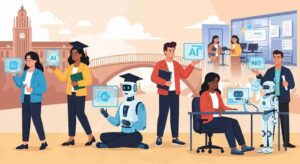 AI and the Entry-Level Job Market: What the Data Show for New College Graduates
Since generative AI tools spread through workplaces in 2023, students and their families have asked whether entry-level jobs for new college graduates are disappearing. The evidence as of November 2026 is mixed: the overall job market for new graduates has improved since 2025, b… Dec 23, 2025
-
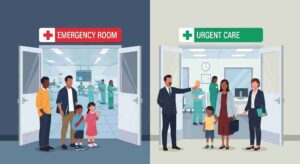 Emergency Room or Urgent Care? A Guide for International Students in the U.S.
If you get sick or hurt while studying in the United States, the place you go first matters: it affects how fast you are seen and how much you pay. U.S. health care separates life-threatening emergencies, which belong in a hospital emergency room (ER, also called the emergency d… Dec 23, 2025
-
 Honors Programs at U.S. Universities: How They Work and What International Students Should Know
Many large U.S. universities run an honors program or honors college inside the university: a smaller academic community with its own seminars, research opportunities and recognition at graduation. For international students applying to big public universities in particular, an … Dec 19, 2025
Comparing colleges?
Put up to six colleges side by side: rankings, admission rates, costs and graduation rates.