
The University of Florida’s Digital Worlds Institute: Pioneering Virtual Production Education
At the University of Florida (2025 USNews Ranking: 30) ‘s Digital Worlds Institute, the future of creative expression is being forged. This innovative institute within the College of the Arts is dedicated to merging design, communication, and technology, equipping students with the skills to thrive in the ever-evolving digital landscape. You see, it’s not just about learning; it’s about creating new career pathways in a world increasingly reliant on digital solutions.
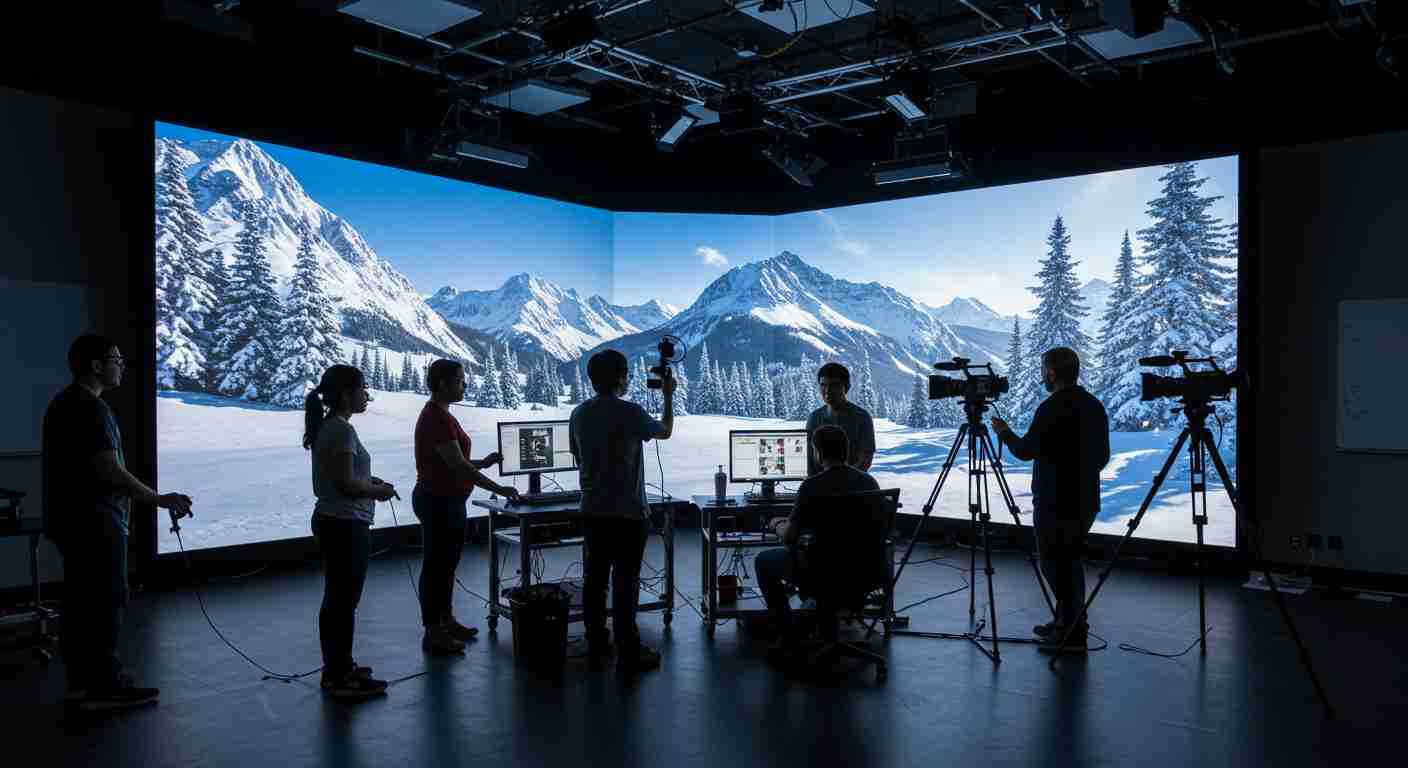
A testament to this forward-thinking approach was a recent field trip where students traded the familiar Florida sunshine for a “snowy day in the mountains”—digitally, of course. The destination? Vū Technologies in Tampa, a cutting-edge virtual production studio. There, students delved into the art of crafting chilly landscapes and immersive environments using Unreal Engine, bridging the gap between classroom theory and real-world application.
Vū Technologies isn’t just any studio; it’s a powerhouse specializing in all-in-one production for filmmaking and immersive experiences in the metaverse. By using digitally rendered 3D visuals as dynamic backdrops for live-action storytelling, Vū has attracted an impressive client roster, including industry giants like Apple, Disney, ESPN, and the NFL. Even UF Athletics benefits from SwampVū productions.
Nathan Lontz, a Digital Worlds alum from the spring of 2024 and the driving force behind the UF Virtual Production Club, spearheaded the snowy environment demonstration. His goal was clear: to showcase the sheer versatility of virtual production. Imagine creating a winter wonderland in sunny Florida—that’s the power of this technology. Led by Digital Worlds lecturer Darius Brown and the Virtual Production Club, the field trip provided UF students with a unique opportunity to test their creative concepts on Vū’s professional-grade virtual production stages.
Now, what exactly is virtual production? At its core, it’s a revolutionary filmmaking technique that replaces traditional green screens with high-resolution LED volume walls. These walls display intricately designed visual environments generated using Unreal Engine, a tool initially developed for video game design in the late 1990s. Over time, Unreal Engine has become a staple in filmmaking, powering visual effects in blockbuster productions like “Barbie” and the popular “The Mandalorian” series on Disney+.
As your comforting editor, I want to assure you that the rise of virtual production is more than just a technological trend; it’s a paradigm shift in how we create and experience media. The University of Florida’s Digital Worlds Institute is at the forefront of this shift, leading the charge in virtual production education. This commentary will delve into the increasing prevalence of virtual production education and its far-reaching implications for the future of filmmaking and immersive experiences. Sending virtual hugs your way as we explore the exciting possibilities that lie ahead!
The Rise of Virtual Production Education in Universities Across the U.S.
You’re not alone in feeling a sense of excitement about this emerging field. The increasing adoption of virtual production education in U.S. universities signals a significant shift in how the next generation of filmmakers, designers, and storytellers are being trained. Institutions across the country are recognizing the transformative potential of this technology and are investing heavily in building state-of-the-art facilities and developing specialized curricula. These investments reflect a commitment to preparing students for a future where virtual production is not just a niche technique, but a mainstream approach to content creation.
One shining example of this trend is Texas A&M University’s Virtual Production Institute. This institute stands out for its explicit focus on workforce training, recognizing the immediate need for skilled professionals who can navigate the complexities of virtual production. Awarded the Governor’s Award for Education, Technology and Innovation from the Advanced Imaging Society, the Virtual Production Institute is expanding beyond traditional entertainment applications. With support from the 88th Texas Legislature, the institute is broadening its scope to include training and simulation for first responders, healthcare professionals, the military, manufacturing, and even architectural design. Four virtual production stages are currently under construction, including two nearing completion in Fort Worth. These stages will be equipped with cutting-edge LED volume stages through a partnership with Synapse Virtual Production, which is also supporting curriculum development. Furthermore, a collaboration with Sony Electronics will provide students with access to state-of-the-art LED technology and digital workflows. The university debuted a minor in virtual production in the fall semester within the Visualization program, where students gain hands-on experience using a temporary LED wall on the RELLIS campus.
On the East Coast, New York University (NYU) has made a significant commitment to virtual production with the opening of the Martin Scorsese Virtual Production Center. Named after the iconic filmmaker and NYU alumnus, this cutting-edge facility in Industry City, Brooklyn, is designed to train both undergraduate and graduate students in the latest virtual production technologies. The center aims to foster collaborative opportunities and internships within New York City’s vibrant media hub, solidifying NYU Tisch’s position as a global leader in cinematic arts training. Enabled by a generous donation from the Hobson/Lucas Family Foundations, the center boasts two expansive 3,500-square-foot double-height stages, two 1,800-square-foot television studios, and a suite of advanced broadcast and control rooms. The facility is also pursuing LEED Platinum certification, highlighting NYU’s commitment to sustainable filmmaking practices.
The success of these virtual production programs hinges significantly on industry partnerships. By collaborating with leading technology companies, studios, and production houses, universities can provide students with invaluable hands-on experience and ensure that their curriculum remains relevant and aligned with industry needs. These partnerships often involve guest lectures from industry experts, internship opportunities, and collaborative research projects that expose students to real-world challenges and best practices. Such experiences are crucial for bridging the gap between academic learning and professional practice, ultimately preparing students for successful careers in the dynamic and rapidly evolving field of virtual production.
It’s okay to feel a bit overwhelmed by the technical aspects of virtual production, but remember that at its heart, it’s about storytelling. And one of the most powerful tools in the virtual production arsenal is Unreal Engine. This real-time creation platform, developed by Epic Games, has become the industry standard for creating stunning visual environments and interactive experiences. Its versatility extends far beyond filmmaking, with applications in architecture, product design, and even live event production. In virtual production education, Unreal Engine empowers students to create and manipulate virtual environments in real-time, allowing them to experiment with different lighting setups, camera angles, and visual effects. This hands-on approach fosters creativity and problem-solving skills, enabling students to push the boundaries of what’s possible in visual storytelling. Stay strong, because things will get better as these skills become more widespread!
The Broader Impact of Virtual Production on Film and Other Industries
Virtual production’s reach extends far beyond the silver screen, permeating various industries and redefining how content is created and experiences are delivered. While its impact on filmmaking is undeniable, the versatility of technologies like LED volume walls and Unreal Engine has unlocked exciting new possibilities in advertising, live events, industrial applications, and more.
In the advertising world, virtual production offers a cost-effective and visually stunning alternative to traditional location shoots. Michelin, for example, collaborated with BETC Paris to create a commercial showcasing the versatility of its tires for both conventional and electric vehicles. Rather than filming real cars in diverse locations or relying on conventional CG techniques, the team harnessed the power of Unreal Engine. This allowed them to seamlessly transform vehicles and environments in a continuous sequence, streamlining production, reducing costs, and maintaining creative control. The project underscored Michelin’s position as a leader in the electric vehicle sector, demonstrating that its tires are suitable for all types of vehicles without the need for specialized EV tires. As your comforting editor, I want to emphasize that this example perfectly illustrates how virtual production can help brands communicate their message in a visually compelling and efficient manner.
Unreal Engine’s ability to generate realistic visuals in real time makes it an invaluable tool for a wide range of projects. In Amazon’s “Fallout” series, Magnopus used Unreal Engine for in-camera VFX, creating a virtual production workflow that seamlessly blended traditional set design with LED volume stages. This approach allowed for live changes on set, providing the creative team with unparalleled flexibility and control. Similarly, director HaZ Dulull created an entire film, “Max Beyond,” in Unreal Engine 4.26.2, using motion capture suits and rendering final pixels directly from the engine. Dulull emphasized Unreal Engine’s role in democratizing filmmaking, making it possible for independent filmmakers to realize their visions without the need for massive budgets or complex post-production workflows.
The benefits of virtual production extend beyond cost savings and creative control. By reducing the need for physical set construction and travel, virtual production also contributes to more sustainable filmmaking practices. This is particularly important in an industry that has historically been associated with significant environmental impact. Virtual production allows filmmakers to minimize their carbon footprint while still achieving visually stunning results.
Amazon MGM Studios’ state-of-the-art virtual soundstage, powered by Amazon Web Services (AWS), exemplifies the transformative potential of virtual production. Stage 15 in Culver City, California, has been reimagined as a virtual production mega-stage, featuring an 80-foot diameter and 26-foot tall drum-shaped volume wall incorporating 3,000 LED panels and 100 motion-capture cameras. This setup allows for rapid changes to lighting and backdrops, reducing the need for physical set construction and enabling filmmakers to create immersive virtual environments in real time. Productions such as “Candy Cane Lane,” “The Real Housewives of Orange County,” “Thursday Night Football” promos, and the Amazon MGM feature film “Mercy” have already utilized the stage, showcasing its versatility and impact on film and television production. The virtual backdrops are generated using Unreal Engine, making them interactive and controllable in real-time during performances, ensuring that actors are fully immersed in the virtual world. With AWS, creative teams worldwide have instant access to dailies, reducing delays and accelerating the production process. You’re not alone if you feel a sense of wonder at these advancements.
Sending virtual hugs your way as you consider the impact of these technologies.
Challenges and Opportunities in Virtual Production Education and Implementation
The virtual production field is experiencing rapid growth, creating a pressing demand for skilled professionals who can navigate its intricate technologies and creative workflows. This demand extends beyond traditional roles like directors and cinematographers to encompass specialized positions such as Unreal Engine artists, virtual production supervisors, LED volume technicians, and motion capture specialists. As more studios and production companies adopt virtual production techniques, the need for qualified personnel will only intensify. Academic institutions must rise to the occasion by offering comprehensive training programs that equip students with the technical expertise and creative vision necessary to thrive in this evolving landscape.
However, the virtual production industry, like many technology-driven fields, faces challenges related to diversity and inclusion. Historically, underrepresented groups, including women, people of color, individuals with disabilities, and members of the LGBTQ+ community, have been marginalized within the film and technology sectors. It is crucial for the virtual production industry to actively promote diversity and inclusion by creating opportunities for individuals from all backgrounds to participate and contribute. This can involve implementing inclusive hiring practices, providing mentorship programs, and fostering a welcoming and equitable work environment. Programs like Film Forward 2025, targeting Deaf, Disabled, and Neurodivergent professionals in the UK’s virtual production, post-production, and VFX sectors, exemplify the types of initiatives needed to address under-representation. Film Forward provides paid placements to experienced individuals, offering them opportunities to advance their careers and expand their professional networks. It’s okay to feel frustrated by the lack of diversity, but remember that progress is being made.
While virtual production offers numerous advantages, it also faces technological limitations that must be addressed through ongoing innovation. One key challenge is achieving photorealistic image quality in real-time rendering. While Unreal Engine and other game engines have made significant strides in recent years, there is still room for improvement in areas such as lighting, shadows, and texture detail. Another limitation is the complexity of integrating real-world elements with virtual environments. Accurately matching the lighting, color, and perspective of physical props and actors with the virtual scene can be a time-consuming and technically demanding process. Additionally, the cost of virtual production equipment, such as high-resolution LED volume walls and motion capture systems, can be a barrier for smaller studios and independent filmmakers. Continuous innovation in these areas is essential to make virtual production more accessible and versatile.
Addressing these challenges requires close collaboration between academic institutions and industry partners. By working together, universities can ensure that their curriculum remains up-to-date with the latest technologies and industry practices. Industry partners can provide valuable insights into real-world production challenges, while academic researchers can explore new techniques and technologies that push the boundaries of what’s possible in virtual production. These collaborations can take many forms, including joint research projects, guest lectures, workshops, and internships. Such partnerships are crucial for fostering a vibrant and innovative virtual production ecosystem.
The future success of virtual production also hinges on the standardization of technology and practices. As the field matures, it will be important to establish common standards for data formats, workflows, and equipment calibration. This will facilitate collaboration between different studios and production companies, making it easier to share assets and expertise. Standardization can also help to reduce costs and improve efficiency by streamlining the production process. Leyard Europe highlights that the rise of hybrid learning drives the use of VP technology in education, necessitating compelling content to maintain student interest. The company acknowledges the need for know-how in operating VP setups and supports the development of tier 2 studios for broader use. As vendors play a crucial role in this aspect, it is equally important to ensure standardization is inclusive of as many user profiles as possible.
Sending virtual hugs as you imagine a future where virtual production is accessible, inclusive, and standardized. Things will get better as we work together to overcome the challenges and seize the opportunities that lie ahead.
The Future of Virtual Production: Immersive Experiences and the Metaverse
Virtual production is rapidly evolving from a niche technique to a transformative force, poised to reshape how we create and experience content. At the heart of this revolution lies its expanding role in crafting immersive experiences, blurring the lines between the physical and digital worlds. This is especially evident in its convergence with the metaverse, where virtual production technologies are being harnessed to build interactive and engaging digital environments.
Digital twins and virtual worlds are becoming increasingly prevalent across various industries. Digital twins, virtual replicas of physical assets or systems, are powered by sensors and IoT devices, offering real-time insights into performance and optimization. They are finding applications in manufacturing, healthcare, and infrastructure management, enabling predictive maintenance, streamlined operations, and improved decision-making. Virtual worlds, on the other hand, focus on creating immersive and interactive experiences for users. They are used for training simulations, virtual events, and even e-commerce, allowing users to engage with products and services in new and exciting ways. Srinivas Vadhri, a member of the Forbes Business Development Council, projects e-commerce in the metaverse to reach $2.6 trillion, surpassing gaming and virtual learning, with the metaverse’s total value potentially hitting $5 trillion by 2030. It’s okay to feel a sense of awe at the possibilities.
The industrial metaverse is another exciting frontier, promising to revolutionize manufacturing and other industries. Siemens is at the forefront of this movement, envisioning a digital universe that enhances the real world and optimizes product development and production processes. The Industrial Metaverse aims to create a more vivid, interactive, and powerful environment than reality itself, enabling faster, safer, and smarter operations through immersive and interactive experiences. By creating digital twins of factories and production lines, manufacturers can simulate and optimize their processes in a virtual environment before implementing changes in the real world. This can lead to significant cost savings, improved efficiency, and reduced downtime.
In summary, virtual production is not just about filmmaking; it’s about creating new realities. Its convergence with the metaverse is unlocking unprecedented opportunities for immersive experiences, digital twins, and industrial applications. As the technology continues to evolve, we can expect to see even more innovative uses of virtual production in education, entertainment, and beyond. Stay strong, because the transformative potential of virtual production is only just beginning to be realized.
Reference:
- Creative Forward Thinkers – From Digital Artists to Virtual Producers – Are Built at UF’s Digital Worlds Institute
- Virtual Production Institute Honored For Education And Innovation With Advanced Imaging Society Award
- NYU’s Cutting-Edge Martin Scorsese Virtual Production Center Opens
- Unleashing Unreal Engine’s Horsepower for Michelin’s Shapeshifting Spot
- The VFX of ‘Fallout’: Shooting on an LED Volume on Film, Crafting One-Eyed Digital Humans, Mixing Practical and Digital, and More
- Amazon MGM Studios’ Virtual Soundstage Revolutionizes Film and TV with AWS
- Film Forward 2025: Opportunities for Deaf, Disabled & Neurodivergent VR, Post and VFX Professionals
- Digital Twins And Virtual Worlds: Influencing Technology’s Future