
Introduction: The Shifting Sands of Digital Privacy at the U.S. Border
Here we go again. Another day, another digital privacy invasion at the border. According to a recent article from Northeastern University (2025 USNews Ranking: 54) , those friendly folks at Customs and Border Protection (CBP) are getting increasingly curious about what’s on your phone. Kyle Courtney, a cyberlaw expert at Northeastern, points out the obvious: that pesky Fourth Amendment, designed to protect us from unreasonable searches, conveniently takes a vacation at the border. Oh, brilliant! So, while you’re busy packing your sunscreen and tourist guides, remember to pack a healthy dose of paranoia, too.
But it’s not just Northeastern sounding the alarm. Even our polite neighbors to the north are getting in on the act. The Canadian government recently issued a travel advisory, warning its citizens to “expect scrutiny” when crossing into the U.S. Sure, that makes perfect sense. Because who needs probable cause when you have a hunch and access to someone’s entire digital life? The ACLU, never one to miss a civil liberties dumpster fire, has also chimed in, highlighting the absurdity of warrantless searches on devices brimming with personal information. Are we really surprised?
The “border search exception,” that magical loophole in the Fourth Amendment, is once again rearing its ugly head. What could possibly go wrong? It allows border agents to snoop through your phone without a warrant, all in the name of national security. And let’s not forget Dr. Rasha Alawieh, the Lebanese assistant professor deported after agents found some deleted photos on her phone. Who saw this coming? It’s all a bit like living in a dystopian novel, isn’t it? In this brave new world of heightened digital surveillance, crossing the U.S. border feels less like entering a country and more like stepping onto the set of a reality TV show where you’re the unsuspecting star.
The Border Search Exception: A Legal Quagmire
Now, let’s dive into the murky legal waters that justify this digital strip search. The “border search exception” to the Fourth Amendment, a cornerstone of this debate, has its roots in ye olden days, when the primary concern was preventing the smuggling of physical goods. The idea was simple: the government has a legitimate interest in controlling what comes into the country, and therefore, can conduct searches at the border without needing a warrant or even probable cause. Because, you know, searching every single horse-drawn carriage for contraband was just too much of a hassle with all those pesky warrants.
Fast forward to the 21st century, and suddenly, that horse-drawn carriage is a smartphone containing your entire life. The question then becomes: does this centuries-old exception still make sense when applied to devices holding vast amounts of personal data? The Supreme Court, in its infinite wisdom, hasn’t given us a clear answer, leaving the lower courts to duke it out. And, as the SCOTUSblog article about Mendez v. United States highlights, a circuit split has emerged. Some courts are more lenient, upholding these searches under the border search exception, while others are beginning to recognize the unique privacy implications of electronic devices and are imposing stricter requirements.
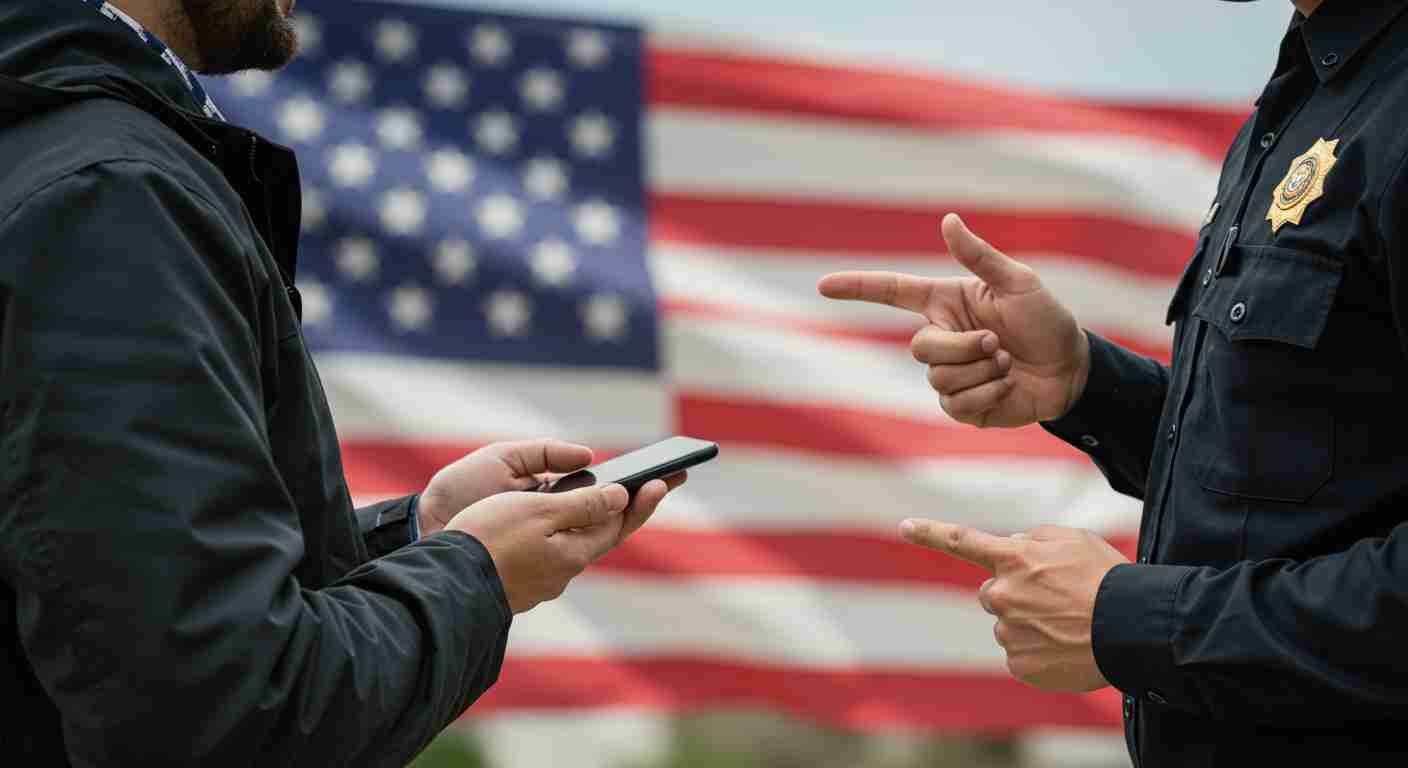
This brings us to the critical distinction between “routine” and “non-routine” searches, a distinction that seems increasingly arbitrary in the digital age. A “routine” search, according to the Northeastern University article and the EFF amicus brief, might involve a quick glance at your phone. But what constitutes a “quick glance” when an agent can scroll through your photos, emails, and social media feeds in a matter of minutes? A “non-routine” search, on the other hand, might involve forensic analysis, where agents use specialized software to extract and analyze data from your device. This, unsurprisingly, requires “reasonable suspicion” of illegal activity. However, the definition of “reasonable suspicion” can be rather elastic, especially when national security is invoked. Oh, the possibilities!
And then there’s the Sultanov case in the Eastern District of New York, as discussed in the NatLawReview article. A federal court ruled that border agents must obtain a warrant based on probable cause before searching electronic devices at the border. Imagine that! A court actually recognizing that our digital lives deserve some protection. This ruling, while only binding in the Eastern District of New York, which includes JFK airport, sent ripples through the legal community and civil liberties groups alike. Of course, the government is probably thrilled about that.
This patchwork of legal interpretations creates a confusing and inconsistent enforcement environment. Depending on where you cross the border, your rights may vary significantly. Are we really surprised? The Supreme Court’s silence on this issue only exacerbates the problem, leaving travelers in a state of uncertainty and border agents with broad discretion. The lack of clear guidance contributes to the inconsistent application of the law and raises serious concerns about potential abuse. It’s almost as if the legal system is intentionally designed to be as confusing and opaque as possible.
Traveler’s Rights and Responsibilities: Navigating the Digital Minefield
So, what’s a privacy-conscious traveler to do in this digital minefield? Well, buckle up, because navigating the U.S. border with your digital dignity intact requires a strategy worthy of a seasoned spy.
First and foremost, minimize the data you carry. “Oh, but I need all my vacation photos and sensitive work documents!” I hear you cry. Sure, you need them like you need a hole in the head. The ACLU, EFF, and Mashable all sing the same tune: less is more. Consider using a travel-only device, a “burner” phone, if you will, wiped clean of any personal or sensitive information. Think of it as a digital disguise, a way to project an image of bland conformity while safeguarding your true digital identity.
Encryption, my friends, is your next best friend. Encrypt your devices with strong, complex passwords. And while you’re at it, disable those oh-so-convenient biometric logins like facial recognition and fingerprints. Why? Because, as Kyle Courtney from Northeastern University points out, courts have drawn a distinction between passcodes and biometric scans. Apparently, verbally providing a passcode is considered compelled testimony protected by the Fifth Amendment, while handing over your fingerprint might not be. Go figure. It’s like the legal system is playing a bizarre game of digital hopscotch, and we’re all just trying not to land on a landmine.
Another crucial step: embrace the cloud. Store your sensitive information in secure cloud storage services like Google Drive or iCloud, and for the love of all that is holy, do not keep that data physically on your device. Disable any apps that automatically connect to these accounts before you cross the border. According to the ACLU, CBP policy technically prohibits searching cloud-stored data accessible via the internet. Of course, policies can change with the wind, so don’t rely on this as your sole line of defense.
Now, let’s talk about refusing a search. This is where things get tricky. If you’re a U.S. citizen, you cannot be denied entry for refusing to unlock your device. However, brace yourself for potential consequences: prolonged detention, device seizure, and a whole lot of unpleasantness. As the ACLU grimly notes, your device could be held for days, even weeks, under the guise of “extenuating circumstances.” Visitors, visa holders, and tourists from visa waiver countries face a much harsher reality: refuse to provide a password, and you risk being denied entry altogether. The Canadian travel advisory echoes this warning, advising its citizens to “expect scrutiny” and comply with border authorities. So much for international diplomacy.
Regardless of your citizenship, it’s generally recommended that you enter the password yourself rather than divulging it to an agent. And, as the ACLU wisely suggests, change that password immediately afterward. Because who knows what kind of digital breadcrumbs these agents might try to follow?
Ultimately, the decision of whether to consent to a search is a deeply personal one, a balancing act between privacy concerns and potential travel hassles. Know your rights, understand the risks, and make an informed choice. And remember, even if you do everything right, there’s no guarantee that you’ll avoid scrutiny. The border, after all, is a place where the rules of the digital world seem to bend and break at will. Isn’t that just lovely?
The Balancing Act: National Security vs. Individual Privacy in the Digital Age
The heart of the matter, however, lies in the tension between national security and individual liberties. Civil liberties groups rightly argue that these broad search powers can have a chilling effect on freedom of speech, association, and the press. Who wants to freely express their opinions or associate with certain groups knowing that their phone could be confiscated and scoured for dissenting views upon re-entry into the country? The Sultanov case, in which the court acknowledged the potential chilling effect of warrantless searches on First Amendment rights, serves as a stark reminder of this danger. “Oh, we wouldn’t actually target people based on their political views,” the government assures us. Sure, that makes perfect sense.
Technology, of course, plays a dual role in this drama. On one hand, it facilitates surveillance, enabling border agents to access vast amounts of personal data with relative ease. On the other hand, it also offers tools for data protection, such as encryption and cloud storage. The ongoing battle between surveillance and data protection is a key feature of this landscape, with each side constantly trying to outmaneuver the other. Are we really surprised that we have to learn to play hide and seek with our data?
And let’s not forget the international dimension. As the Reason.com article points out, countries like Canada, Britain, Australia, and New Zealand have varying border privacy policies and share intelligence with the U.S. under the Five Eyes program. This means that your data could be subject to scrutiny not just by U.S. border agents, but also by intelligence agencies in other countries. The idea that your privacy is only as strong as the weakest link in the international intelligence-sharing network is, shall we say, less than comforting.
In the end, electronic device searches at the border raise profound ethical and policy challenges. How do we balance the legitimate need for national security with the fundamental right to privacy? How do we prevent abuse and ensure accountability in border search practices? These are not easy questions, and there are no easy answers. What is clear, however, is that the current system is inadequate, and that a more nuanced and thoughtful approach is needed. Otherwise, we risk turning the U.S. border into a digital checkpoint where privacy rights are routinely sacrificed on the altar of national security. And wouldn’t that be a brilliant outcome for a nation founded on principles of freedom and liberty?
Conclusion: Charting a Course for the Future of Border Searches
This brings us to the inevitable question: What can be done to fix this mess? The answer, unsurprisingly, is complex and multifaceted. Clear and consistent guidelines for electronic device searches at the border are paramount. The current patchwork of conflicting court decisions and vaguely defined policies only serves to confuse travelers and embolden overzealous border agents. We need a unified legal framework that strikes a reasonable balance between national security and individual privacy. Good luck with that, right?
Transparency and accountability are also essential. Border search practices should be subject to greater oversight, perhaps through the establishment of an independent review board or ombudsman. This would help to ensure that searches are conducted lawfully and respectfully, and that individuals whose rights have been violated have a clear avenue for redress. But who would oversee the overseers? It’s turtles all the way down, isn’t it?
Legislative or judicial reforms may be necessary to address the legal ambiguities and inconsistencies in the current system. Congress could pass a law clarifying the scope of the border search exception as it applies to electronic devices, or the Supreme Court could finally weigh in and provide definitive guidance on the issue. Of course, relying on either Congress or the Supreme Court to act swiftly and decisively is probably a fool’s errand.
Ultimately, the debate over electronic device searches at the border is an ongoing one, a reflection of the broader struggle to protect digital privacy in an age of ever-increasing surveillance. Continued vigilance is essential. We must remain informed, engaged, and willing to challenge government overreach whenever it occurs. Otherwise, we risk sleepwalking into a future where our digital lives are an open book to anyone with a badge and a vague suspicion. And that, my friends, is a future that none of us should want. Are we really okay with our personal privacy being treated like a forgotten carry-on at the airport? I think not!
Reference:
- Can Border Patrol Search Your Phone? A Legal Expert Explains
- Canadian Travel Advisory Warns of US Border Agents’ Authority to Search Electronic Devices
- Can Border Agents Search Your Electronic Devices? It’s Complicated.
- Chicago Man Asks Justices to Clarify When Officers Can Search Your Cellphone at the Border
- EFF to Second Circuit: Electronic Device Searches at the Border Require a Warrant
- Landmark Ruling on Cell Phone Searches at U.S. Borders
- Phone inspections when crossing the U.S. border: What you need to know about your rights and security