
Introduction: The Evolving Landscape of PhD Career Paths
Hey guys, your friendly editor here! Let’s chat about something near and dear to my heart, and probably yours too if you’re reading this: the ever-changing world of career paths for PhD graduates. Back in my university days, the unspoken rule was pretty much “PhD equals professor.” But times, they are a-changin’!
We’re seeing more and more brilliant minds with doctorates looking for opportunities outside the hallowed halls of academia. It’s not just about a lack of professor gigs, though that’s definitely a factor. It’s also about a desire to make a real-world impact, to apply all that specialized knowledge to tangible problems in industry. I remember feeling that pull myself, wanting to see my research have a more immediate effect.
Now, institutions are starting to catch on. Take Stanford University, for instance. Their PhD Pathways program is a fantastic example of how universities are beginning to recognize and support these diverse career trajectories. It’s designed to connect students with industry leaders and alumni who’ve already made the jump, opening their eyes to possibilities they might not have even considered. Big sister here thinks it is so cool to see how Stanford provides a place for students to discuss the career possibilities with Ph.D. alumni and other successful people.
But why this shift, you ask? Well, the academic job market is notoriously competitive, that’s no secret. And let’s be honest, the traditional academic path isn’t for everyone. Some folks are craving something different, something that feels more aligned with their values and goals. They want to be where the action is, tackling real-world challenges and seeing the fruits of their labor more directly.
So, what are we going to dive into today? I want to explore these trends, the challenges that PhDs face when they decide to transition to non-academic roles, and, most importantly, the strategies that both institutions and individuals can use to make these transitions smoother and more successful. It’s all about empowering you, the brilliant PhD, to find the career path that truly sparks your passion and allows you to shine.
The Rise of ‘Alt-Ac’ Careers: Exploring Opportunities Beyond the Professoriate
Alright guys, big brother here is back to delve even deeper into this fascinating world of “Alt-Ac” careers. What exactly are we talking about when we say “alternative academic?” Well, it’s essentially any career path that utilizes the skills and knowledge gained during a PhD program but isn’t a traditional faculty position. And trust me, the possibilities are way more diverse than you might think!
A recent study focusing on Library and Information Science (LIS) in China offers a great example. It revealed a significant expansion of Alt-Ac roles in areas like resource construction, academic services, intelligence research, and even social functions. Think about it: PhDs in LIS are perfectly positioned to manage vast amounts of information, develop innovative digital resources, and analyze complex data for strategic decision-making. These skills aren’t just valuable in libraries; they’re in high demand across various sectors.
And speaking of high demand, let’s talk about AI and data science. The tech world is practically screaming for experts who can wrangle massive datasets, develop sophisticated algorithms, and build cutting-edge AI applications. The World Economic Forum predicts a massive employment growth for AI and machine learning specialists, and a Deloitte survey showed that tons of business leaders are actively seeking folks with data skills for generative AI projects. Universities are stepping up, too, with a growing number offering specialized AI programs to meet this demand. I’ve even heard of institutions creating entire new departments dedicated to Artificial Intelligence. Now, how cool is that?
But it’s not just about tech, not by a long shot. There are PhDs making a difference in all sorts of unexpected places. Take school teaching, for example. It might seem like a far cry from academic research, but programs like the Australian Nexus initiative are helping PhDs transition into secondary education. These programs provide the necessary training and support to leverage their subject matter expertise and research skills in the classroom. Elliott Child, with a doctorate in human geography, discovered a passion for working with young people and now teaches humanities. He feels his experience in high school teaching would actually make him a better academic if he returned to academia. Nexus primarily places teachers in disadvantaged rural communities, so their PhD is helping address educational inequity.
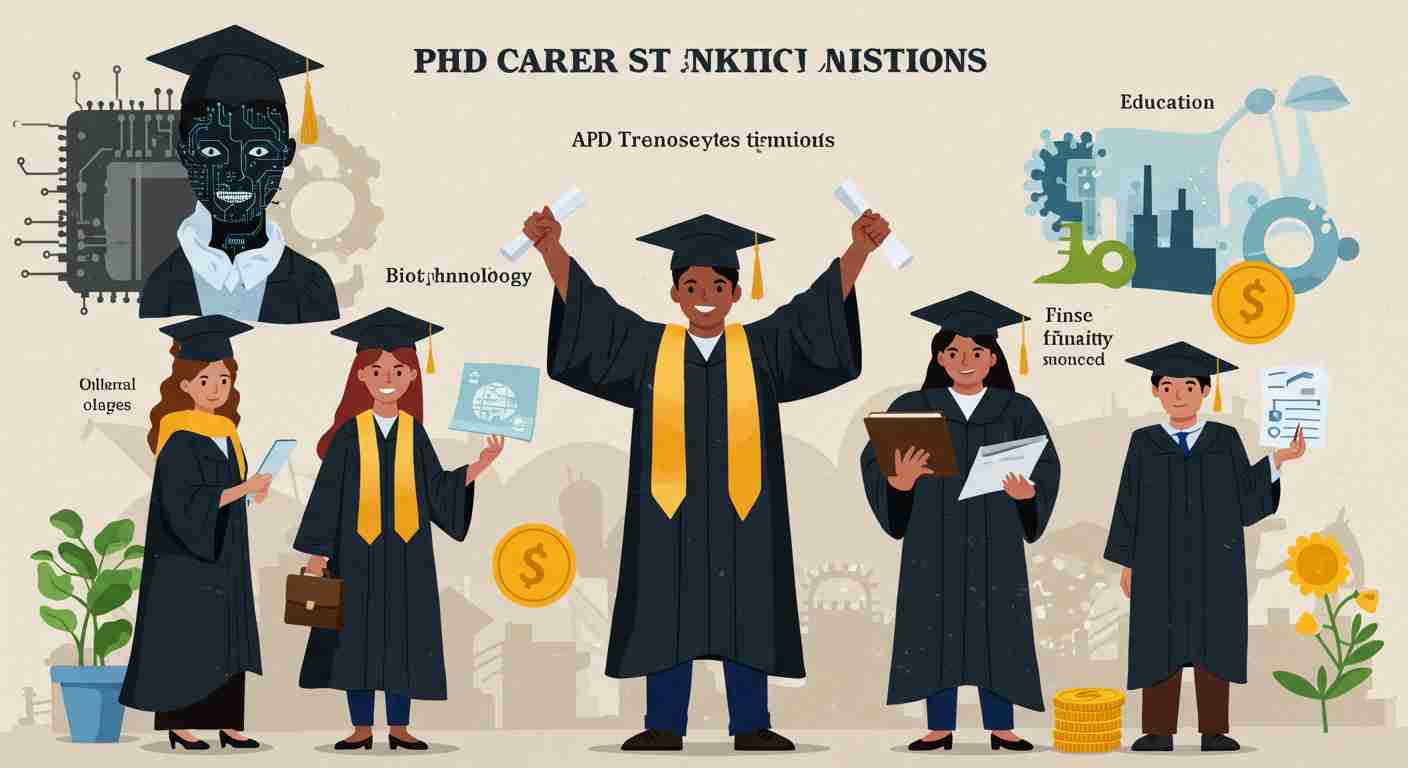
Now, here’s the kicker: universities need to fully recognize the value of these Alt-Ac careers and adapt their programs accordingly. It’s not enough to just churn out future professors; we need to equip PhDs with the skills and knowledge they need to succeed in a wide range of fields. This means incorporating more practical training, fostering industry partnerships, and providing career counseling that goes beyond the traditional academic path. It may include individual development plans and mentorship training. The Modern Language Association’s executive director, Paula Krebs, believes that departments need time and money to implement professional development initiatives for PhDs, and schools need to invest in this stuff.
What specific skills and knowledge do PhDs bring to these Alt-Ac roles? Well, for starters, they’re masters of research and analysis. They know how to gather information, evaluate evidence, and draw conclusions based on data. They’re also excellent problem-solvers, able to tackle complex challenges with creativity and critical thinking. And let’s not forget their communication skills! PhDs are trained to present their ideas clearly and persuasively, whether in writing or in front of an audience. These skills are incredibly valuable to employers, who are always looking for innovative thinkers and effective communicators.
A soil science Ph.D. graduate from an Ivy League college, Maura Slocum, felt that her Ph.D. was worth the research skills that she gained. Ryan Collins, with a Ph.D. in media arts and science from a public flagship in the Midwest and is now an SEO strategist, acknowledges the value of the critical thinking and research skills he gained during his doctoral studies.
The benefits PhDs offer to employers can be huge, but are still not always recognized. Ashley Moses, a neuroscience doctoral candidate at Stanford University, launched PhD Paths, a website documenting the career journeys of PhD holders who left academia, because of the lack of guidance for doctoral students leaving academia.
So, the next time you hear someone say that a PhD is only good for teaching, tell them to think again! The world is full of exciting and rewarding opportunities for PhDs who are willing to think outside the box.
Bridging the Gap: Translating PhD Skills for Industry Success
Alright everyone, your friendly editor is back to tackle the practical side of things. So, you’ve got that shiny PhD, now what? How do you translate all that specialized knowledge and research experience into something that resonates with employers in industry? It’s like learning a new language, but don’t worry, big brother is here to help you decode the lingo!
One helpful model is the HIRES-PhD framework. This framework identifies and categorizes essential transversal skills that are crucial for industrial employability. Think of it as a roadmap for highlighting your hidden talents. It breaks these skills down into four key themes: Workmanship, Charisma, Empowerment, and Tenacity.
Let’s break that down a bit. Workmanship refers to your technical skills, your ability to manage projects, and your knowledge transfer capabilities. Charisma is all about your communication, networking, and leadership skills – basically, how well you can connect with people and inspire them. Empowerment focuses on your self-skills, entrepreneurship, and adaptability – your ability to take initiative and navigate new situations. Finally, Tenacity covers your commitment, problem-solving skills, and attention to detail – your ability to persevere and get things done.
Now, how can you cultivate these skills during your PhD training? Well, it’s all about being proactive and seeking out opportunities to develop these areas. Communication is key – practice presenting your research to diverse audiences, participate in workshops, and seek feedback on your writing. Networking is also crucial – attend conferences, connect with industry professionals, and build relationships with alumni. Problem-solving is inherent to the research process, but you can also sharpen these skills by participating in hackathons, case competitions, or even volunteering for challenging projects. And adaptability? Embrace new technologies, learn new skills, and be open to change.
And speaking of new technologies, let’s talk about AI. This is a game-changer in virtually every industry, and PhDs are uniquely positioned to leverage their expertise in this field. Whether you’re developing new algorithms, analyzing data, or implementing AI solutions, your PhD training has given you a solid foundation for success.
Consider the translation and interpretation industry, for instance. AI is rapidly transforming workflows, automating routine tasks, and providing new tools for language professionals. This means that PhDs in linguistics, computational linguistics, or related fields need to embrace these technologies and develop complementary skills. They need to understand how AI works, how to evaluate its performance, and how to integrate it into their workflows. But it’s not just about technical skills. As AI takes over more routine tasks, the demand for human skills like creativity, critical thinking, and cultural understanding will only increase.
I read a story about the Middlebury Institute of International Studies hosting a panel where practitioners of translation and interpretation (T&I) discussed the impact of AI. Many were initially prejudiced against AI, but urged others to experiment.
Finally, let’s not forget the importance of networking and mentoring. The WiNS Adlershof workshop is a great example of how connecting with industry professionals and alumni can help you navigate the transition to industry. These events provide a platform for sharing experiences, building relationships, and gaining valuable insights into the job market. Dr. Sarah Pan from Procter & Gamble, for example, shared her experiences and insights into how networking and mentoring, especially through the WiNS program, have aided her career development.
Think of it this way: your PhD is like a superpower. It gives you unique skills and abilities that are highly valued in industry. But it’s up to you to learn how to use that superpower effectively. By developing your transversal skills, embracing new technologies, and building a strong network, you can unlock your full potential and launch a successful career beyond academia.
Challenges and Solutions: Addressing the Doctoral Dilemma
Okay, hey guys, your friendly neighborhood editor is here to talk about something super important: the hurdles PhD grads face when they’re trying to ditch the ivory tower for something… different. It’s a real issue, and honestly, it’s something that universities need to get their act together on, pronto!
See, reports are popping up everywhere about how PhDs feel totally unprepared for the non-academic world. I’m talking feeling lost, unsupported, and like their years of intense study were only good for, well, more study. It’s this “doctoral dilemma” – programs are still cranking out future professors like it’s the only option, even though a HUGE chunk of grads are heading for other paths.
Why the disconnect, you ask? Well, a lot of it comes down to old-school thinking. Some faculty still see non-academic careers as “selling out” or somehow less prestigious. Then there’s the issue of limited resources. Many departments just don’t have the staff or expertise to provide career guidance for anything other than the professoriate. And let’s face it, sometimes there’s just a lack of awareness about all the amazing opportunities out there for PhDs beyond academia.
But fear not, my brilliant friends! There are solutions, and they’re starting to gain traction. One big one is implementing career-oriented courses that specifically address the skills and knowledge needed for non-academic jobs. Think resume workshops, networking events, and even courses on things like project management and data analysis.
Some universities are even creating “doctoral life design studios” – dedicated spaces where PhDs can explore different career paths, identify their strengths and weaknesses, and develop a personalized plan for their future. It’s like having a career coach built right into your program! The University of Alabama (2025 USNews Ranking: 171) offers career-oriented courses tailored to both future faculty and those seeking non-academic work, and Johns Hopkins University launched a new Doctoral Life Design Studio to help PhDs envision and pursue the best path for them, dedicating almost a million dollars to PhD professional development initiatives in 2020.
And speaking of personalized plans, individual development plans (IDPs) are another game-changer. These are essentially roadmaps for your career, outlining your goals, skills, and the steps you need to take to get where you want to be. They encourage open communication between you and your faculty advisor about your career preferences, even if those preferences lie outside of academia.
That open communication piece is HUGE, by the way. We need to foster an environment where it’s okay to say, “Hey, I love research, but I’m not sure I want to be a professor.” Faculty need to be supportive and understanding, even if it’s not the path they envisioned for you.
Finally, don’t underestimate the power of external resources. Career coaching services, often run by ex-academics who’ve been there, done that, can provide invaluable guidance and support. Ashley Ruba, who set up a coaching service, charges $250 an hour for coaching sessions. Online platforms like PhD Paths, created by Ashley Moses, a neuroscience doctoral candidate at Stanford University, are also popping up, documenting the career journeys of PhD holders who’ve successfully transitioned to non-academic roles. Ashley created PhD Paths because of the lack of guidance for doctoral students leaving academia. Think of them as your virtual cheerleaders, offering inspiration and practical advice.
Conclusion: Empowering PhDs for a Future Beyond Academia
So, let’s bring it all home, shall we? Big sister here wants to leave you with a clear message: we need a real shift in how we think about PhD education. It’s not just about churning out future professors; it’s about empowering brilliant minds to make a difference in whatever field they choose.
Think about it – PhD skills are incredibly valuable across a wide range of industries. We’re talking critical thinking, problem-solving, data analysis, communication – the list goes on! These are the skills that drive innovation, fuel economic growth, and address some of the world’s most pressing challenges. We need to empower PhD graduates to see themselves as innovators and leaders, not just as academics-in-waiting.
To make this happen, we need greater collaboration between universities, employers, and, most importantly, PhD students themselves. Universities need to actively seek input from industry about the skills and knowledge that are most in demand. Employers need to recognize the value of PhD training and create opportunities for graduates to apply their expertise. And students need to be proactive in exploring their career options and developing the skills they need to succeed.
Investing in PhD professional development isn’t just good for individuals; it’s good for the broader economy. By equipping PhD graduates with the skills and knowledge they need to thrive in industry, we can unlock their full potential and drive innovation across all sectors. It’s an investment in our future, and it’s one that we can’t afford to ignore.
So, here’s my call to action: let’s embrace innovation in PhD education. Let’s adapt our programs to meet the evolving needs of the job market. And let’s provide the resources and support that PhD graduates need to launch successful careers, whether in academia or beyond. It’s time to move beyond the traditional mindset and empower PhDs to create a brighter future for themselves and for the world. Let’s work together to ensure that every PhD graduate is well-prepared for a successful future, whatever path they choose.
Reference:
- Career event explores paths for PhDs and postdocs | Stanford Report
- Emerging Trends in Alternative-Academic Careers in Chinese Library and Information Science (LIS)
- Top Degree Programs for Studying Artificial Intelligence
- Some See School Teaching as ‘Enticing Alternative’ to Academia
- The Changing Landscape of Doctoral Education in STEM: A Study on PhD Student and Faculty Advisor Career Preferences
- Universities ‘do little to help PhDs who want to leave academia’
- The Doctoral Dilemma: Universities’ Lack of Support for PhDs Leaving Academia
- HIRES-PhD: A Transversal Skills Framework for Diversifying PhD Employability
- Eight Key Insights from “AI and the Future of Translation and Interpretation”
- WiNS Workshop: Transitioning to Industry After the PhD: Benefits of Networking and Mentoring