
The Unfolding Crisis: Visa Terminations and Their Impact on International Students
Alright, let’s dive into this mess. Your laid-back editor here, just trying to make sense of it all.
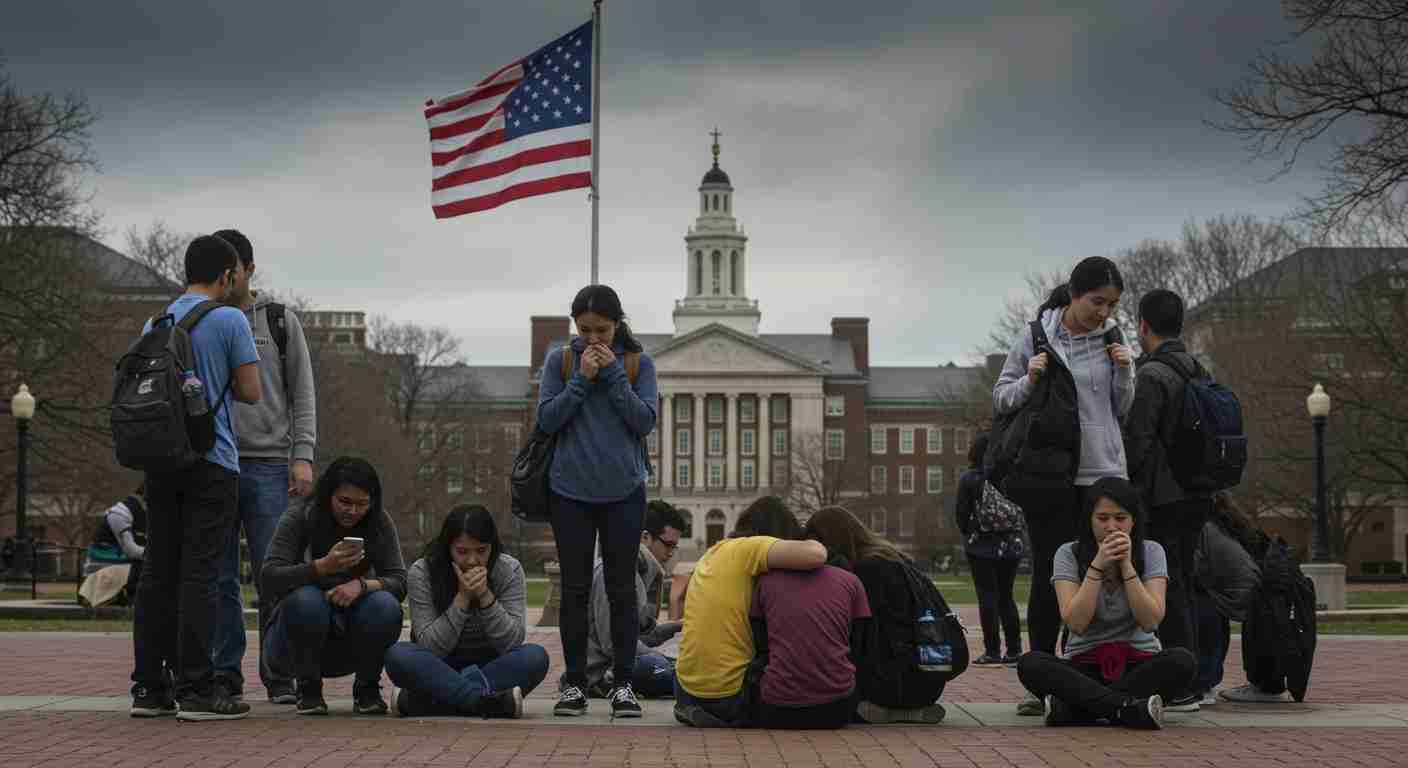
A wave of anxiety is washing over U.S. campuses as international students find their academic futures hanging precariously in the balance. Picture this: you’re thousands of miles from home, diligently pursuing your degree, when suddenly, out of the blue, you receive an email stating that your visa has been terminated. Just like that, your life is upended, and you’re faced with the daunting prospect of immediate departure. No big deal, but it’s a pretty scary situation.
This isn’t some isolated incident, folks. Universities across the nation, from the University of Wisconsin–Madison (UW-Madison) to institutions in California and beyond, are reporting a disturbing trend: a sharp increase in student visa terminations by the U.S. government. And yes, this is happening under the Trump administration. According to UW-Madison’s official statement on April 7, 2025, the Student and Exchange Visitor Information System (SEVIS) records of several current and former international students were unceremoniously axed. As of that Monday morning, six current students and seven alumni on employment extensions were directly impacted. The kicker? Termination of status usually means “pack your bags, you gotta leave, like, now”. UW–Madison, for its part, insists it had no hand in these decisions, a claim echoed by other universities caught in the crossfire.
Across the Universities of Wisconsin system, the situation is even more widespread. Wisconsin Public Radio reported on April 8, 2025, that more than two dozen UW students and alumni had their visas terminated. Mark Pitsch, spokesperson for the Universities of Wisconsin, confirmed that 14 of those instances occurred at universities other than UW-Madison. We’re talking about real people, real lives disrupted, and the ripple effects are spreading fast.
Nationally, the numbers paint an even grimmer picture. The New York Times reported in early April 2025 that nearly 300 international students faced abrupt visa revocations, sparking fear and confusion at institutions like Harvard, Stanford, the University of Texas at Austin, and Minnesota State University-Mankato. Dozens more students across the University of California’s sprawling system also found themselves in immigration limbo.
The consequences are immediate and devastating. Students are scrambling to understand their legal status, facing potential deportation, and grappling with the uncertainty surrounding their academic and professional futures. Degrees are left unfinished, research projects abandoned, and career prospects thrown into disarray. It’s not just about the individual students; this is about the intellectual vitality and diversity of our universities.
Universities, caught off guard, have issued statements of support, offering legal resources and counseling services. UW-Madison, for example, has contacted affected students and alumni, advising them on potential consequences and providing information about legal aid. However, these efforts often feel like a band-aid on a gaping wound. The resources are limited, the legal landscape is complex, and the universities themselves are often left in the dark about the specific reasons for the terminations. Another coffee won’t hurt, trying to keep up with the chaos.
Adding fuel to the fire, Secretary of State Marco Rubio announced on March 27th the revocation of at least 300 student visas, claiming these students sought entry into the U.S. to participate in destructive movements. This pronouncement cast a long shadow, raising questions about the motivations behind the terminations and the potential targeting of students based on their political views.
The sense of panic and confusion is palpable, not just among international students but also within the broader academic community. As Urban Milwaukee noted on April 9th, these cancellations are part of a broader crackdown on immigration by the Trump administration, with international students caught in the crosshairs.
So, what’s behind this sudden surge in visa terminations? Is it really about national security, or are other factors at play? We’ll delve deeper into the potential reasons, from minor infractions to political motivations, and examine the long-term effects this crisis could have on international education in the U.S.
Reasons Behind the Revocations: A Web of Politics, Minor Infractions, and Unclear Justifications
Just thinking out loud, but it seems the official line from the Trump administration is pointing fingers at national security concerns and alleged visa violations. But let’s be real, the devil’s always in the details, right? Reports are surfacing of students being targeted for some seriously minor stuff – we’re talking traffic tickets, folks. And then there’s the thorny issue of political activism, particularly those pro-Palestinian protests that seem to have ruffled some feathers.
The Guardian reported in April 2025 that nearly 40 international students had their visas yanked for what amounted to trivial offenses, leaving them in a legal whirlwind. Lisa, a student at the University of Wisconsin–Madison, discovered her SEVIS record terminated after getting a couple of speeding tickets. Bill, a recent graduate, got hit with a termination notice for driving with an expired license. I mean, come on, really?
And then there’s the uncomfortable connection to Secretary of State Marco Rubio’s pronouncements. Remember that March 27th announcement where he talked about revoking visas of students involved in protests? It’s hard to ignore the timing, especially when some of these revocations seem suspiciously linked to activism related to Palestine, according to Urban Milwaukee. Mahmoud Khalil, a former Columbia University student, found himself detained for leading pro-Palestinian protests. Rumeysa Ozturk, a Tufts doctoral student, faced similar issues. Coincidence? Maybe. But it certainly raises eyebrows.
But hey, who’s counting? KSL TV reported that universities in Utah are also seeing a wave of visa revocations, with the official reasons including “failure to maintain nonimmigrant status” and “criminal record check discrepancies.” The lack of advance notice is particularly troubling, leaving students scrambling to understand their situation.
The real kicker here is the sheer lack of transparency and due process. Immigration attorney Shenqi Cai told The Guardian that these SEVIS terminations appear unprecedented, with students not even getting a chance to explain their side of the story before their legal status is revoked. It’s like being judged and sentenced without a trial.
This has organizations like the ACLU and the Presidents’ Alliance on Higher Education and Immigration up in arms. Miriam Feldblum, chief executive of the Presidents’ Alliance, criticized the government’s approach as unprecedented, citing a lack of explanation or recourse for students and institutions, according to The New York Times. It’s a far cry from the principles of fairness and justice we like to think this country stands for.
Of course, it’s not all political protests and minor infractions. Some revocations are tied to actual criminal infractions or, as mentioned, traffic violations. But the question is, are these infractions being used as a pretext for something else? Are students being unfairly targeted because of their political views or national origin?
The lack of clarity from the government only fuels these concerns. As Inside Higher Ed pointed out, some institutions are receiving only “general” justifications for the revocations, leaving them clueless about the specific reasons. This lack of transparency makes it incredibly difficult for universities to support their international students and creates a climate of fear and uncertainty.
Let’s not forget the legal perspective here. Immigration lawyers are swamped with inquiries from students facing visa terminations. They’re pointing out that minor offenses, things that wouldn’t normally jeopardize student status, are now being used as grounds for revocation, according to The New York Times. It’s a worrying trend that suggests a shift in how the government is interpreting and enforcing immigration laws.
So, what’s the underlying motivation here? Is it a genuine effort to protect national security, or is it a politically motivated crackdown on dissent and a way to reduce immigration under the guise of security? The answer, as always, is probably somewhere in the messy middle. But one thing is clear: the way these terminations are being carried out raises serious questions about fairness, due process, and the true intentions of the Trump administration. Your laid-back editor thinks this is a problem.
The University Response: Support Efforts, Resource Limitations, and the Broader Implications for Higher Education
Now, let’s talk about how universities are scrambling to deal with this mess. It’s not pretty. For institutions like UW-Madison and others within the Universities of Wisconsin system, these visa terminations represent a logistical and ethical nightmare. They’re caught between supporting their international students and navigating the often-murky waters of federal immigration enforcement.
UW-Madison, like many of its peers, has offered support services to affected students, including legal resources and counseling. But let’s be honest, these services can only go so far. The demand for legal assistance is skyrocketing, and universities are often limited in the resources they can provide. As Wisconsin Public Radio noted, UW-Madison’s International Student Services has been in contact with affected students, but the university is also trying to understand the reasons behind the terminations themselves – a task made all the more difficult by the lack of transparency from the federal government.
And it’s not just UW-Madison feeling the squeeze. Across the Universities of Wisconsin system, smaller institutions with fewer resources are struggling to cope. These universities often rely heavily on international student tuition to stay afloat, and the sudden loss of students, coupled with the fear of declining enrollment, is creating a perfect storm of financial and administrative challenges.
Mark Pitsch, spokesperson for the Universities of Wisconsin, confirmed cancellations at other UW campuses, emphasizing that the system is working to gather more information, according to Urban Milwaukee. But gathering information is one thing; providing comprehensive support and advocating for affected students is another, especially when budgets are tight and legal expertise is limited.
The impact on international student enrollment is a major concern. The Association of Public and Land Grant Universities (APLU) is worried about a potential chilling effect, as prospective international students may think twice about studying in the U.S. if they fear arbitrary visa revocations, according to the Almanac News. This could have serious consequences for universities that rely on international students to fill graduate programs, conduct research, and contribute to the overall academic environment.
In the fall of 2024, UW-Madison alone had nearly 8,000 international students enrolled, roughly half graduate and half undergraduate, according to Wisconsin Public Radio. Across the Universities of Wisconsin system, there are more than 10,000 international students from over 136 countries, who pay approximately $15,000 more in tuition each semester than Wisconsin residents. That’s a significant financial contribution that could be jeopardized if international student enrollment declines.
It’s not just about the money, though. International students bring diverse perspectives, contribute to research and innovation, and enrich the cultural fabric of our universities. As Ted Mitchell, president of the American Council on Education, pointed out, the U.S. needs to remain a top destination for international students due to their positive economic and cultural impact, according to the Almanac News.
Faculty and student organizations are also stepping up to advocate for affected students and promote a welcoming environment for the international community. At UW-Madison, the Graduate Worker Union is working to learn more about the affected graduate workers and urging the university to assist students in reversing these revocations, according to Wisconsin Public Radio. They’re even hosting rallies to raise awareness and demand action.
However, the challenges remain significant. Universities are grappling with understaffed international student offices, a lack of clear guidance from federal agencies, and the constant threat of further visa terminations, as reported by Inside Higher Ed. One international student adviser at a regional public college reported difficulties in marshaling campus resources and obtaining timely guidance from university counsel.
Smaller colleges, in particular, are struggling. Some are seeing a significant number of visa revocations, with one college reporting 25 students affected, according to Inside Higher Ed. The president of one small faith-based institution told Inside Higher Ed that the visa revocations were not due to criminal activity or foreign policy threats but were given a “general” justification, leaving the institution in the dark.
Ultimately, universities are trying to balance their commitment to international students with the realities of a complex and often unpredictable political landscape. It’s a delicate balancing act, and the stakes are incredibly high.
Legal Challenges and Future Implications: Seeking Redress and Protecting International Students’ Rights
Amidst this turmoil, legal challenges are surfacing as a beacon of hope for affected international students. Organizations like the ACLU and individual attorneys are mounting legal defenses, aiming to counteract what many see as unjust visa terminations. The legal arguments being employed often center on due process violations, challenging the lack of transparency and opportunity for students to defend themselves against the allegations leading to their visa revocations. Some cases also argue that the terminations are discriminatory, targeting students based on their political views or national origin, a claim substantiated by reports in The New York Times and Munsif Daily.
The ACLU, for instance, is representing Xiaotian Liu, a Dartmouth College doctoral student facing deportation despite having no criminal record or involvement in protests, as reported by Munsif Daily. This case, and others like it, highlight the potential for overreach by the government in its enforcement of immigration laws. Attorney Stacy Tolchin has also filed multiple suits in federal court, signaling a growing wave of legal challenges to the visa terminations, according to The New York Times.
The outcome of these legal battles could have significant long-term implications for international students’ rights and the future of international education in the U.S. A successful challenge could establish important legal precedents, protecting international students from arbitrary visa revocations and ensuring greater transparency and due process in immigration proceedings. Conversely, a failure to challenge these terminations could embolden the government to continue its restrictive policies, further chilling international student enrollment and undermining the U.S.’s reputation as a welcoming destination for scholars and researchers.
The New York Times, Munsif Daily, and the Palm Springs Desert Sun have all highlighted the potential for policy changes and legal reforms to safeguard international students. These may include clearer guidelines for visa terminations, greater transparency in the decision-making process, and enhanced legal protections for international students facing immigration issues.
It’s also crucial for international students to be aware of their rights and to seek legal counsel when facing immigration challenges. The University of California system is facing pressure to support detained students remotely, providing remote program continuation, stipends, and legal assistance, according to The New York Times. This approach underscores the importance of universities standing by their international students and providing the resources they need to navigate the complex legal landscape. Another coffee? You know it.
Conclusion: Reaffirming Values and Building a More Inclusive Academic Community
So, where does this leave us? Your laid-back editor sees a clear path forward. International students are not just numbers on a spreadsheet; they are vital contributors to the intellectual, cultural, and economic vibrancy of U.S. universities and the broader society. The recent wave of visa terminations serves as a stark reminder of the precarious position many international students find themselves in, highlighting the need for systemic change.
Greater transparency and due process in visa termination procedures are paramount. Students deserve to know why their visas are being revoked and to have a fair opportunity to defend themselves. Arbitrary terminations, based on minor infractions or political views, undermine the principles of justice and academic freedom. Policies must be put in place to protect the rights and well-being of international students, ensuring they are treated with respect and dignity.
Universities, for their part, must reaffirm their commitment to diversity, inclusion, and academic freedom. This means creating a more welcoming and supportive environment for international students, providing robust legal and counseling services, and advocating for their rights at the federal level. As stated by numerous university leaders and student organizations, international students are an integral part of the academic community, and their contributions must be valued and protected.
The future of international education in the U.S. hinges on our ability to create a more just and equitable system. Let’s build a future where international students are not seen as potential threats but as valued members of our academic community, enriching our universities and contributing to a more interconnected and understanding world. It’s a hopeful vision, and one that we must all work towards achieving. That’s all folks.
Reference:
- Update on federal immigration enforcement
- More Than Two Dozen UW Students, Alumni Have Visas Terminated by US Government
- Nearly 300 Students Have Had Visas Revoked and Could Face Deportation
- Dozens of US Students’ Visas Abruptly Revoked Over Minor Infractions
- Trump Administration Cancels Visas of 27 Students at UW Campuses
- Utah Colleges Report International Student Visas Revoked Without Notice
- Concern Grows as Visas are Terminated for Dozens of International Students at California Colleges
- 300 International Student Visas Cancelled by US: Avoid This Critical F-1 Mistake to Prevent Deportation
- Student Visa Dragnet Reaches Small Colleges